.svg)
Short answer
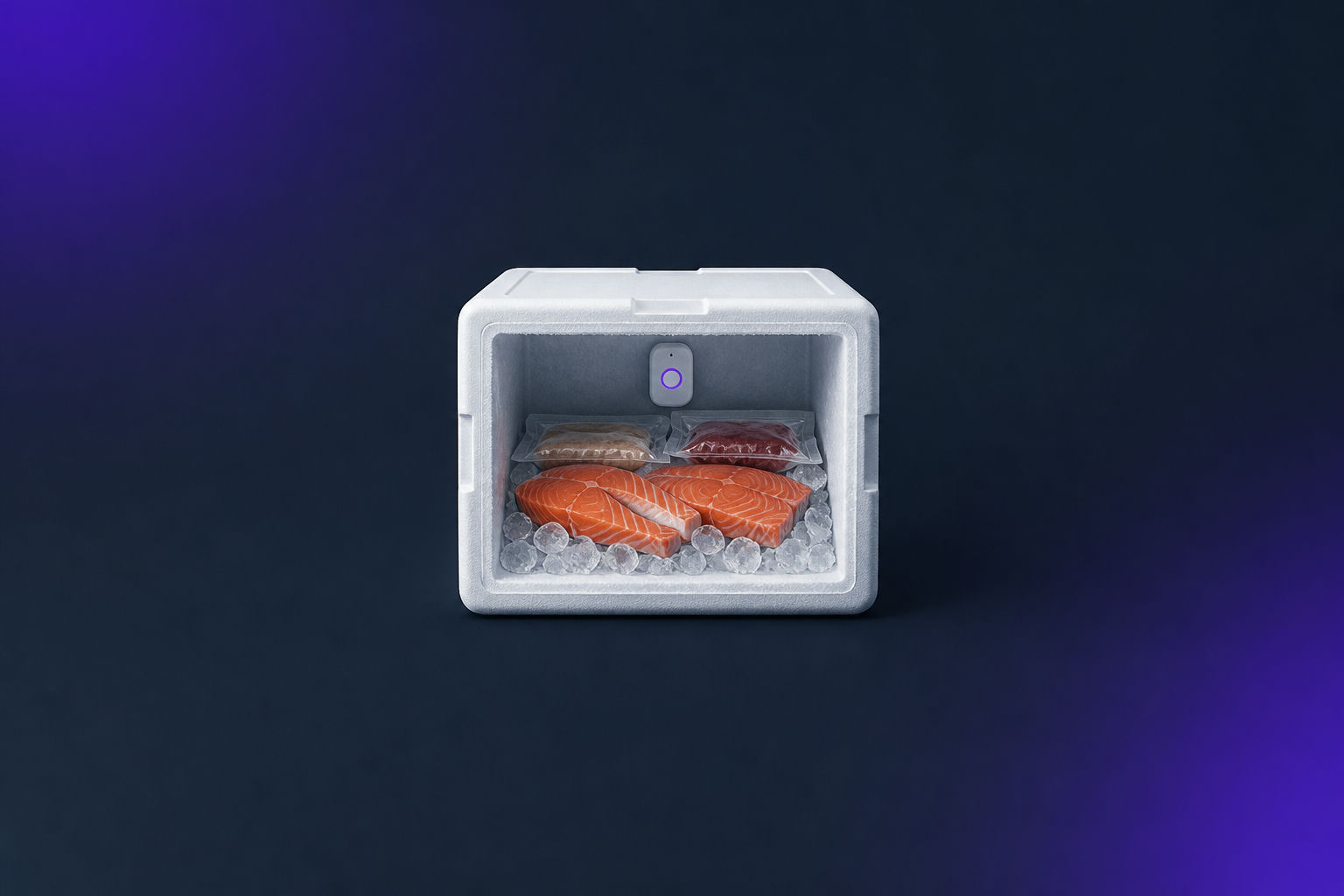
Bluetooth beacon tracking provides cold chain teams with continuous visibility of assets, helping monitor location and condition across various stages like docks, trailers, and handoffs. These small, low-cost transmitters broadcast signals detected by nearby receivers, offering real-time tracking, improved inventory accuracy, and crucial condition monitoring, especially useful for temperature-sensitive goods between manual scan points. Source: Wiliot IoT Pixels
Verdict: 4.2 / 5. Bluetooth beacon tracking helps cold chain teams keep a condition trail across docks, trailers, rooms, and handoffs. Bluetooth beacons are small, low-cost Bluetooth Low Energy (BLE) transmitters for proximity and location tracking of assets, supporting real-time visibility, inventory accuracy, and condition monitoring, with [BLE commonly used for asset tracking](https://www.forbes.BLE commonly used for asset tracking through small, battery-powered beacons that broadcast to nearby phones or IoT sensors.
What Is Bluetooth Beacon Tracking and How Does It Work?

Bluetooth beacon tracking helps cold chain teams follow assets between scan points where visibility drops off. A tagged pallet, tote, tray, or case broadcasts a BLE signal that nearby receivers detect, turning the asset into a readable moving object rather than a silent unit waiting for the next manual scan.
The short version for cold chain teams
Bluetooth Low Energy beacons attach to assets or containers and communicate with receivers over Bluetooth. In cold chain operations, an asset can be seen when it enters a warehouse zone, waits on a dock, moves through staging, or passes into another party's custody, assuming receiver coverage exists at those handoff points.
The technical model starts with proximity. A beacon broadcasts, a receiver hears it, and the system estimates where that beacon is. IEEE research describes BLE beacons as common tools for asset tracking and indoor positioning, and explains that systems often use RSSI values to estimate approximate distance and methods such as trilateration to calculate position inside a defined space through BLE beacon communication with receivers.
What the signal can and cannot prove
Condition monitoring is why BLE matters in cold chain. Location says where a load was last observed. A condition record shows whether the product, package, or container stayed within acceptable handling conditions during the journey.
That distinction matters because a delivery signature is thin evidence. It does not explain whether a temperature excursion happened at origin, in transit, during unloading, or while the load sat between systems. Bluetooth beacon tracking is strongest when it fills that gap with time-stamped location and condition readings.
BLE beacons are a strong fit for indoor and handoff-heavy cold chain visibility, but the value depends on receiver density, calibration quality, governance, and maintenance discipline.
Scorecard: Bluetooth Beacon Tracking for Cold Chain
Bluetooth beacon tracking earns high marks for operational visibility because it addresses a real cold chain blind spot: what happens between manual scans, dock events, and partner system updates. The score drops where the technology needs disciplined receiver coverage, calibration, governance, and tag maintenance to make the data defensible.
| Evaluation dimension | Score | What the score means |
|---|---|---|
| Real-time visibility | 4.4 / 5 | Strong in facilities, docks, yards, and routes with enough receivers or mobile gateways. |
| Condition monitoring fit | 4.3 / 5 | Useful for temperature-sensitive flows where handoff evidence matters more than a simple delivery timestamp. |
| Deployment complexity | 3.5 / 5 | Receiver placement, signal behavior, and calibration can add friction. |
| Maintenance burden | 3.2 / 5 | Battery-powered tags create a maintenance program unless the design uses battery-free IoT Pixels. |
| Privacy and governance | 3.4 / 5 | Asset-focused designs are cleaner, but staff or partner tracking requires strict boundaries. |
| Strategic value | 4.2 / 5 | Best for operators who treat visibility as infrastructure, not as a short-term patch. |
Pricing Models for Bluetooth Beacon Systems (as of 2026)
Bluetooth beacon system pricing is easy to misunderstand when teams focus on tag cost and ignore the coverage model behind the data. As of 2026, public evidence supports the shape of BLE beacon pricing better than universal dollar tiers, because total cost depends on tags, receivers, software, integration, coverage, and whether the system can use existing wireless infrastructure.
What you actually pay for
Pricing models usually break into several cost lines rather than one tag price. Buyers should expect the commercial model to include:
- Beacon hardware for pallets, containers, reusable assets, or product groupings.
- Receivers, gateways, mobile devices, or network equipment that can hear beacon broadcasts.
- Software for device management, maps, rules, alerts, dashboards, and integrations.
- Deployment services for site survey, installation, calibration, and workflow design.
- Ongoing support, battery replacement, security updates, and data retention.
A Gartner review describes Kontakt.io as a BLE system using Bluetooth Low Energy beacons and sensors for location tracking, asset management, and environmental monitoring, and notes that RTLS equipment can be a cost-effective addition on top of a Cisco WLAN for asset tracking and related use cases through BLE beacons and sensors for physical spaces.
Why no single price is honest
Tiered pricing can look tidy on a proposal, but coverage drives the real cost. A small cold room with fixed handoff points is a different project from a multi-site distribution loop involving 3PLs, transportation carriers, reusable containers, and store back rooms.
For a cold chain quality leader, the right buying question is whether each priced component improves the condition record. If a receiver misses a true handoff point, it may not help prove custody. If a tag cannot stay active for the full loop, it may create another manual process. If software cannot connect condition, dwell, and identity to the shipment record, the team still argues from partial evidence.
Pros and Cons of BLE Beacon Implementation
BLE beacon implementation appeals to cold chain operators because it gives them more than a scan event, especially across docks, trailers, cold rooms, and partner handoffs. The weak points show up in the same messy places where the technology is most useful: dense facilities, shared custody, reusable assets, and long loops where maintenance discipline can slip.
Pros: what BLE beacons do well
Real-time location awareness is the clearest advantage. BLE beacon systems can help teams see assets as they move through facilities, receive alerts when items leave defined areas, and support mobile teams that do not always work near fixed scan points.
For cold chain, the more valuable advantage is the combination of movement and condition. Supply Chain Brain argued in 2023 that cold supply chains benefit from track-and-trace technologies because frozen goods need consistent and precise temperatures throughout delivery, and described how warehouse operators can use live data to see the exact flow of inventory and its condition through live data on inventory flow and condition.
Indoor fit
BLE also fits indoor environments better than satellite-dependent location methods. In warehouses, cross-docks, cold rooms, and store receiving areas, the question is usually not the latitude and longitude of a pallet. Teams need to know whether the right unit reached the right zone, stayed there too long, crossed a threshold, or moved into another party's custody without a clean record.
Cons: where BLE beacons fall short
Receiver dependency is the main operational tradeoff. A beacon does not create useful visibility by itself. It must be heard by a receiver, phone, gateway, or other Bluetooth-capable device, and cold chain facilities often have metal racks, insulated rooms, dense inventory, and complex traffic patterns that can affect signal behavior.
Privacy is the second tradeoff, especially if a project drifts from asset visibility into people visibility. In 2025, research on indoor localization systems expanded around privacy and security issues, including BLE beacon tracking vulnerabilities and the need for improved obfuscation, efficiency, and scalability in privacy and security research on indoor localization.
Maintenance burden
The third tradeoff is maintenance. Battery-powered beacons may be low-power, but they still create a tag health program across thousands of assets. That burden matters for reusable asset loops, where the operating pain is already loss, delay, imbalance, and uncertainty across partners.
How Bluetooth Beacons Prove "Received in Good Condition"

Bluetooth beacons prove "received in good condition" when the deployment is designed around evidence, not simple detection. The goal is to replace a single receiving event with a chain of observed identity, location, dwell, and condition data across each custody point.
The handoff record gets richer than a signature
A cold chain handoff usually fails in the gray zone between systems. The shipper has one record, the carrier has another, the receiver signs at the dock, and the quality team asks when the product crossed a condition threshold.
A stronger record ties together four pieces of evidence:
- Identity: which pallet, tote, tray, case, or reusable container was observed.
- Location: where the asset was detected, such as staging, dock, trailer, cold room, or receiving.
- Time: when it was detected and how long it dwelled there.
- Condition: whether the monitored state stayed within the required handling band.
Bluetooth systems become more credible when designed for redundancy. Research on BLE asset tracking found that using multiple beacons can improve accuracy and system reliability compared with assigning a single beacon per target, which is relevant when a quality team needs confidence around a disputed handoff.
Calibration decides how much confidence you can claim
Calibration quality determines whether a BLE system can support a serious operational claim or only a rough directional signal. In one 2025 localization dataset, researchers generated a radiomap by collecting 100 RSSI samples from each of eight beacons at 130 points for each advertising channel during calibration, a reminder that reliable indoor location data depends on structured setup rather than coverage assumptions.
Battery-free comparison
For teams comparing BLE with ambient IoT, the maintenance model deserves close attention. Wiliot is a Physical AI company that gives organizations continuous, scan-free visibility into the location and condition of every item in their supply chain. Battery-free IoT Pixels capture that data, and the Wiliot Physical AI Platform refines it into actionable insights, predicting problems like shrink, mis-ships, and spoilage, and recommending the next move.
That shift matters because item-level visibility is most useful when the tag program does not become another exception process. Battery-free IoT Pixels harvest ambient RF energy and are read over existing Bluetooth infrastructure, which helps cold chain teams keep continuous condition sensing close to the product rather than limiting it to a shipment, truck, or room record. For a deeper look at condition-led use cases, see cold chain temperature monitoring.
The Verdict: Is Bluetooth Beacon Tracking Right For You?
Bluetooth beacon tracking is right for cold chain operators that need continuous handoff evidence and are willing to build the receiver coverage, data model, and operating discipline that make the evidence defensible. The technology is strongest when the business problem is specific: missing condition context across the points where custody changes and disputes start.
Who should choose it
Choose BLE beacon tracking if your main problem is missing context between scans. Logistics companies are among the business types that can use asset tracking, and that matters because cold chain disputes often happen across companies rather than inside a single controlled warehouse.
BLE is also a good fit when you manage reusable assets across 3PLs, transportation carriers, stores, and processors. In those loops, the business issue is broader than "where is the pallet?" A returnable asset can be lost, delayed, idle, imbalanced, or sitting in the wrong custody state long enough to create shortages and over-buying pressure.
Mixed-tool evaluation
As of 2026, BLE should also be evaluated alongside RFID, camera sensing, and other visibility tools rather than treated as a universal replacement. Supply Chain Brain described AI, camera sensors, RFID, and Bluetooth tags as visibility technologies used in warehouse automation plans in 2023, which points to a mixed-tool reality rather than a single winning technology.
Who should skip or rethink it
Skip a battery-powered BLE program if you cannot maintain tags across the loop. Battery replacement, tag failure, and ownership confusion become expensive in reusable asset networks where assets leave your four walls and move through partner facilities.
Teams that want item-level visibility without a per-tag battery-maintenance program should look closely at battery-free models. In 2019, IEEE Spectrum reported Wiliot's view that ordinary Bluetooth traffic, Wi-Fi signals, and Bluetooth 5.0 radiation could provide enough energy that simple beacon tags would not need energy storage, which framed the maintenance problem differently for no-battery Bluetooth beacons.
Next evaluation step
The next step is not a broad vendor tour. Map the cold chain handoffs where condition disputes happen, mark the locations where manual scans or fixed read points leave gaps, and decide whether the system must monitor pallets, reusable containers, or individual products. If the answer is item-level, scan-free condition data, Wiliot’s temperature monitoring is the more focused evaluation path.
Frequently asked questions
How do I get continuous condition data across cold chain handoffs?
Bluetooth beacons provide continuous condition data by broadcasting BLE signals that nearby receivers can associate with an asset, location, and time. When condition sensing is attached to that identity trail, a cold chain team can see whether a pallet, tote, or product group stayed within expected handling conditions as it moved through receiving, staging, transportation, and delivery handoffs. Source: Wiliot Temperature Monitoring
What is better for real-time cold chain visibility, RFID or Bluetooth?
RFID and Bluetooth answer different visibility questions, so the better choice depends on the handoff problem. RFID is often strong at defined read points, while Bluetooth is useful when teams need ongoing proximity, dwell, and condition signals between those points. Many cold chain networks use a mix of visibility methods because custody, condition, and inventory accuracy are separate problems. Source: Wiliot Physical AI platform
Can I use Bluetooth tracking without creating privacy risks for my staff or partners?
Yes, but the design has to stay asset-centered. Bluetooth tracking should identify physical products, pallets, crates, or containers, not quietly infer staff movement unless there is a clear operational reason and governance model. The cleanest cold chain deployments focus on custody, condition, dwell, and inventory traceability for goods moving through the network. Source: Wiliot IoT Pixels
How much maintenance do battery-powered Bluetooth beacons require?
Battery-powered Bluetooth beacons require a maintenance plan because every deployed tag has a finite power source. The burden depends on tag count, loop length, ownership, and how often assets leave controlled facilities. Battery-free IoT Pixels reduce that burden by avoiding a per-tag battery replacement cycle for item-level visibility. Source: Wiliot IoT Pixels
Sources
Every reference cited on this page, in the order Wiliot evidence, related articles, then outside research.
- 1.Wiliot’s temperature monitoring (wiliot.com)
- 2.Wiliot Physical AI platform (wiliot.com)
- 3.What Is Bluetooth Beacon Tracking and How Does It Work? (kkkcdzmhnnqevxhexzpo.supabase.co)
- 4.BLE beacon communication with receivers (ieeexplore.ieee.org)
- 5.live data on inventory flow and condition (supplychainbrain.com)
- 6.privacy and security research on indoor localization (nature.com)
- 7.Scorecard: Bluetooth Beacon Tracking for Cold Chain (kkkcdzmhnnqevxhexzpo.supabase.co)
- 8.no-battery Bluetooth beacons (spectrum.ieee.org)