.svg)
Short answer
Low energy beacons, utilizing Bluetooth Low Energy, significantly improve continuous condition monitoring by providing scan-free, item-level visibility. They allow nearby infrastructure to repeatedly detect items between manual scans, connecting location, dwell time, and condition context to the physical product throughout its journey. This helps teams identify misplaced goods, track asset movement, and link condition exceptions to specific items and their paths. Source: Wiliot Reusable Asset Tracking
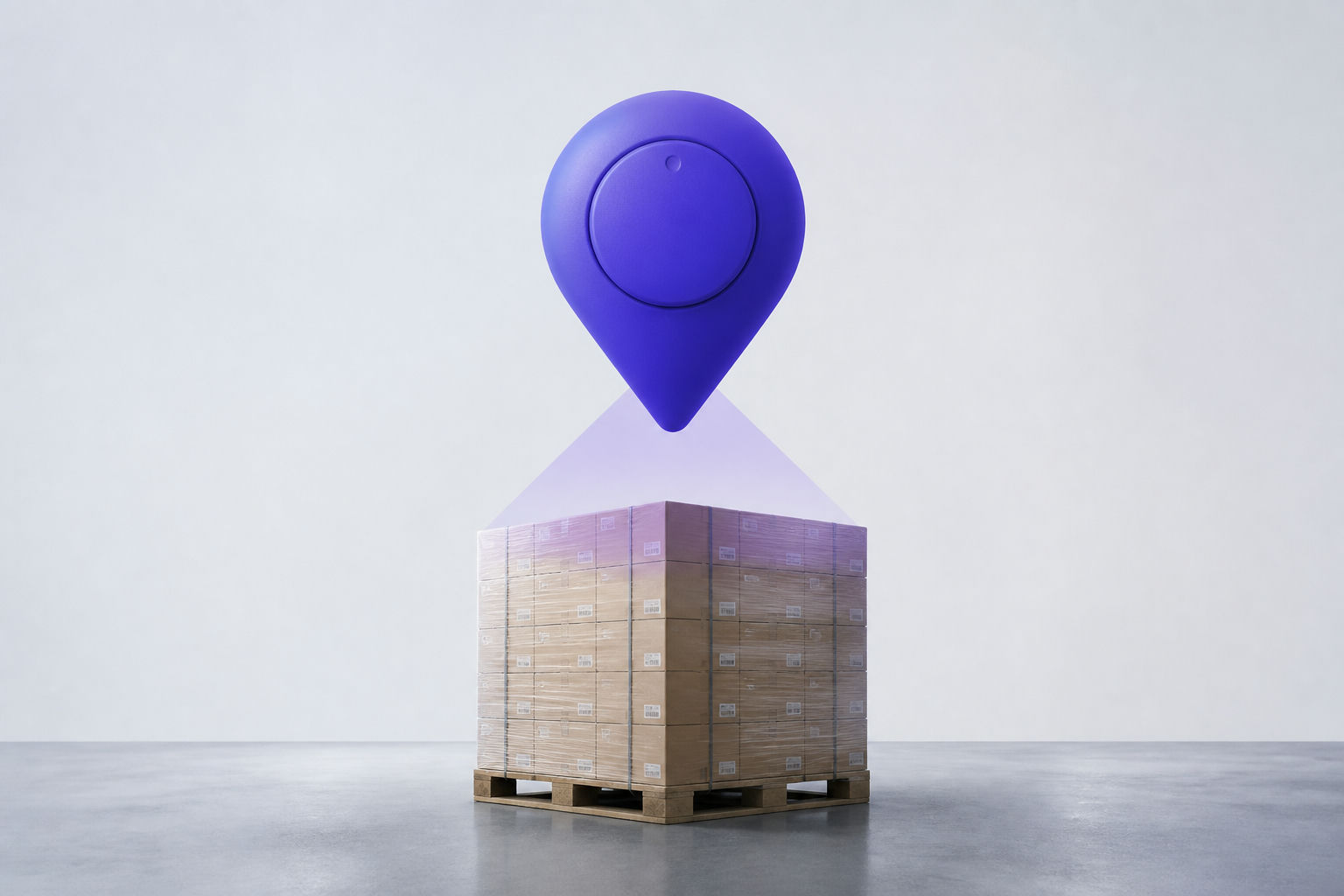
Low energy beacons, often using Bluetooth Low Energy (BLE), are small, wireless transmitters that broadcast signals to nearby receiving devices, so teams can detect products, pallets, totes, and crates for location tracking and condition monitoring while gaining better visibility across supply chain and logistics operations. A Bluetooth Low Energy beacon is useful because it turns a silent product or handling unit, such as a pallet, tote, or crate, into something nearby systems can notice without a manual scan.
What is a low energy beacon?

A low energy beacon is a small wireless transmitter that sends short Bluetooth Low Energy signals to nearby phones, gateways, scanners, or other receiving devices. In plain English, the beacon lets a tagged item announce that it is present, so a system can recognize the item, associate it with a location, and connect that event to an operational record without waiting for a worker to scan a barcode.
The simple version
A BLE beacon does not need to act like a full computer to be useful. It broadcasts a signal, a receiver listens, and the resulting event helps answer practical questions that warehouse and logistics teams ask every day: is the item in this area, did it leave the dock, did it dwell too long in a staging lane, or is it still inside the warehouse when the system says it shipped?
For continuous condition monitoring, that visibility matters because a condition record is only useful when it stays attached to the physical item. If a cold-chain tote, reusable crate, or shipment unit moves through receiving, storage, picking, staging, and dispatch, the beacon gives nearby infrastructure repeated chances to observe the item between formal checkpoints.
A low energy beacon improves continuous condition monitoring by making the item visible between scans, so location, dwell, and condition context can be tied to the same physical product over time.
Why the "low energy" part matters
The low energy part is what makes the technology practical for dense supply chain settings as of 2026. Warehouses and transport networks can involve huge numbers of assets, and any monitoring method that depends on constant hands-on checks quickly turns into a labor problem. A beacon approach reduces the need to touch every asset just to confirm that it is still present.
That does not mean every beacon captures every type of condition data by default. A basic beacon may support presence and location awareness, while a connected product architecture can add sensing, cloud processing, and workflows around that identity. The foundation is the same in both cases: the item becomes visible to nearby infrastructure without waiting for a person to point a scanner at it.
Key terms and concepts
A low energy beacon sits inside a wider vocabulary that can get muddy fast if "beacon," "tag," "sensor," and "tracking" are treated as the same thing. The terms below keep the rest of the guide grounded in operations rather than radio jargon.
Glossary
- Bluetooth Low Energy (BLE) is a wireless communication technology used by BLE beacons to broadcast short signals to nearby receiving devices. In this article, BLE is the radio method behind the beacon, rather than a detailed protocol discussion.
- A beacon is a transmitter that broadcasts an identifier or signal so a receiver can detect it. In supply chain settings, that signal is useful when it can be associated with a physical product, pallet, tote, crate, or reusable asset.
- A receiver is a device or infrastructure point that hears a beacon signal. It may be a gateway, phone, scanner, or another Bluetooth-capable receiving device.
- Item-level visibility is the ability to see and monitor physical products or assets at the level of the individual item, rather than only at the carton, pallet, shipment, or building level.
- Condition monitoring is the practice of observing condition-related context, such as whether an asset stayed in the right area, how long it dwelled, or whether a monitored condition needs attention.
- A scan-free workflow lets the system detect an item through nearby infrastructure instead of depending only on a manual barcode or RFID scan. Eddystone is an open format for Bluetooth Low Energy beacons that Google launched with APIs and management tools, according to coverage of the Eddystone launch.com/technology/google-embraces-bluetooth-low-energy-beacons-launches-open-format-eddystone-apis-and-management-tools).
What these terms mean in operations
A beacon signal becomes useful only when it connects to a business object. A warehouse does not care that an anonymous radio signal exists; it cares that the signal belongs to a specific tote, pallet, SKU, returnable container, or shipment unit. That connection between physical identity and system record is what turns a wireless event into usable physical-world data.
A condition record needs the same context. Temperature and dwell matter more when location and movement are tied to the exact item and the exact handoff. Without that link, teams may know something went wrong but still struggle to identify which products were affected or where the exception started.
How low energy beacons bridge the warehouse visibility gap
A warehouse visibility gap appears whenever inventory is only confirmed at fixed moments, such as receiving, cycle count, pick confirmation, or dispatch, while the actual products keep moving in between. Low energy beacons address that gap by adding scan-free observations in the messy middle of warehouse work.
The blind spot between formal events
A receiving scan confirms that something entered the building. A dispatch scan confirms that something left. Between those two events, products may sit in a staging lane, move to reserve storage, get split across pick locations, return from a line, or wait inside a refrigerated area. If the system only knows the formal scan events, the middle of the journey is partly invisible.
That blind spot is especially painful for reusable assets and cold-chain products. A delayed crate may look lost, a misplaced tote may look unavailable, and a product that waited too long in the wrong zone may still appear fine in the inventory system until someone investigates.
Beacons add repeated observations
A low energy beacon helps close the visibility gap by creating repeated opportunities for nearby infrastructure to detect the item. BLE beacon technology has been studied for inventory placement mapping in warehouses, as shown by IEEE work on inventory placement mapping using Bluetooth Low Energy beacon technology. That use case is practical because warehouse teams need more than a count; they need to know where items are placed and whether that placement still matches the operating plan.
The improvement is operational, not magic. The beacon does not replace every system of record, and it does not remove the need for disciplined inventory processes. It adds more physical evidence, so when a receiver detects an item in a zone, the inventory record can move closer to the real state of the floor.
A simple warehouse example
Consider a reusable cold-chain tote moving through a food distribution site:
- At receiving, the tote is associated with an inbound shipment and detected near the dock.
- In storage, the tote is detected in a controlled area, creating location context between manual events.
- During picking or staging, the tote moves to a lane, where dwell time can become visible.
- At dispatch, the tote is detected near an outbound handoff, supporting shipment verification.
- In the return loop, the tote can be recognized again when it comes back into the network.
That chain of observations helps teams distinguish loss from delay, imbalance, or poor placement. The operational value comes from continuity, because each detection adds another clue about where the physical item actually is.
Core applications: from asset location to condition monitoring
A low energy beacon is most useful when it supports a decision. That decision may involve where to look for an item, whether to replenish a location, whether a handoff happened, or whether a product's condition history needs review. The same scan-free visibility that fills warehouse blind spots can also improve reusable asset control, inventory availability, and continuous condition sensing.
Asset location and reusable loop control
Asset location is the most direct use case. Pallets, trays, totes, crates, roll cages, and returnable containers often move through third-party logistics providers, transportation carriers, grocery networks, QSR supply chains, food processing sites, and automotive loops. When those assets are not visible, loop owners may overbuy replacements or miss service commitments, and disputes can start over whether an item is lost or merely delayed.
A beacon-based approach helps by giving the asset a persistent digital identity. The system can see that the asset exists in a facility or area instead of treating it as missing until a person scans it. For loop owners, that difference is practical: true loss is not the same as idle dwell or network imbalance, and each problem needs a different fix.
Inventory placement and availability
Inventory placement is where beacon data starts to affect day-to-day warehouse work. If inventory is physically in the wrong aisle, lane, room, or temperature zone, the ERP or WMS record may still look clean while workers waste time searching. A placement signal can expose that mismatch earlier.
That is why beacon-based inventory placement mapping matters. It shifts the question from "did someone scan this at some point?" to "where does the physical evidence suggest this item is now?" For high-volume operations, that difference can support better replenishment, fewer manual searches, and more credible exception handling.
Condition monitoring in context
Continuous condition sensing depends on more than a sensor reading. A temperature exception, dwell exception, or handling concern becomes actionable when it is tied to the item's identity and journey. If a product was detected in the wrong zone before a condition alert, the team has a clearer path to root cause.
Wiliot is a Physical AI company that gives organizations continuous, scan-free visibility into the location and condition of every item in their supply chain. Battery-free IoT Pixels capture that data, and the Wiliot Physical AI Platform refines it into actionable insights, predicting problems such as shrink and mis-ships as well as spoilage, and recommending the next move. The Wiliot Physical AI Platform supports that shift from isolated readings to item-level inventory insights.
From beacons to connected products
IoT Pixels extend the beacon idea into connected products that can be identified and monitored at item level. In that model, value comes from linking the item's identity to location and condition context in real-time inventory intelligence, using nearby Bluetooth infrastructure to read physical-world data without a manual scan.
That matters most in the messy middle of operations. A pallet may be in the building but not where the system expects. A tote may be available but idle in the wrong part of the loop. A cold-chain item may be present while exposed to a condition risk. The platform's job is to turn those physical-world data points into inventory insights that operators can act on.
How beacons compare to other tracking technologies

A low energy beacon is best understood as a continuous visibility tool for nearby detection, while barcodes and traditional RFID often appear in workflows built around explicit scan moments or fixed read points. The right choice depends on the operational blind spot, whether that problem is labor, placement accuracy, condition context, or proof that an item moved through a specific handoff.
Barcode, RFID, and beacon roles
Each technology has a useful role, and as of 2026, many operations use more than one:
- Barcodes work well when a worker can see the label, reach the item, and scan it at the right time.
- Traditional RFID can read tagged goods at defined points or during directed scanning workflows.
- BLE beacons support nearby wireless detection that can help monitor presence, placement, and movement between formal events.
- Ambient IoT and battery-free IoT Pixels build on item-level visibility by adding connected product identity and condition context without a per-tag battery-maintenance program.
The wrong comparison is to ask which technology wins in every setting. The better operational question is which blind spot causes the most cost, delay, or quality risk.
Where beacons fit best
A beacon-based model fits well when the item's journey matters between normal scan points. That includes returnable containers moving across partners and food items moving through controlled zones, along with inventory that may be present but misplaced. In those cases, the business problem is whether the system has enough physical evidence to trust the inventory record.
Beacons also fit when labor is the bottleneck. If a process requires workers to scan every item at every meaningful transition, coverage will always depend on compliance, workload, and access. Scan-free detection reduces that dependency, which is why beacon technology is so relevant to continuous condition monitoring.
What to read next
A condition monitoring program should answer a practical question: which product, asset, or shipment had the exception, where was it when the exception happened, and what should the team do next? Low energy beacons help create that record by tying repeated item observations to the physical journey.
For cold-chain teams, the deeper issue is often which temperature record is trustworthy enough for quality decisions. A useful next read is Cold Chain Temperature Monitoring: Which Record is Right?, because it connects item-level visibility to the quality and compliance decisions that happen after a product has already moved.
Where the beacon stops
A low energy beacon is not a complete operating model by itself. It is the starting point for physical products that can be identified and monitored, especially in the gaps where manual scans are too sparse to tell the full story.
Frequently asked questions
How do I use a low energy beacon to improve continuous condition monitoring?
A low energy beacon improves continuous condition monitoring by giving nearby infrastructure repeated chances to detect an item and connect that observation to its location, dwell, and condition context. That helps teams see what happened between receiving, storage, staging, and dispatch, rather than relying only on isolated scan events. Source: Wiliot Temperature Monitoring
What makes a BLE beacon useful for tracking products in a warehouse?
A BLE beacon is useful in a warehouse because it broadcasts a signal that nearby receiving devices can detect, which helps connect a physical product or asset to a location record. That is especially helpful for inventory placement, where teams need to know whether goods are where the system says they are. Source: Wiliot Inventory Intelligence
How is a low energy beacon different from a traditional RFID tag?
A low energy beacon uses Bluetooth Low Energy signals for nearby detection, while traditional RFID is commonly used around directed scans or fixed read points. In practice, the two can complement each other: RFID can confirm defined events, while beacon-based visibility can add more context between those events. Source: Wiliot IoT Pixels
Can Bluetooth beacons track an item's temperature?
A basic Bluetooth beacon mainly supports wireless identification and nearby detection, so temperature monitoring depends on the sensing and platform capabilities built around the item. In a connected product model, item identity, location, and condition data can be tied together so temperature exceptions are easier to connect to the affected goods. Source: Wiliot Temperature Monitoring
Should I use beacons for reusable assets like pallets, crates, and totes?
Beacons can be useful for reusable assets because the business problem is often loop visibility, not one-time shipment tracking alone. If pallets, crates, totes, or roll cages are delayed, idle, or imbalanced across partners, item-level visibility helps separate true loss from assets that are simply in the wrong place. Source: Wiliot Reusable Asset Tracking
Sources
Every reference cited on this page, in the order Wiliot evidence, related articles, then outside research.
- 1.Wiliot Physical AI Platform (wiliot.com)
- 2.Wiliot Inventory Intelligence (wiliot.com)
- 3.Wiliot IoT Pixels (wiliot.com)
- 4.Bluetooth Low Energy beacon (en.wikipedia.org)
- 5.What is a low energy beacon? (kkkcdzmhnnqevxhexzpo.supabase.co)
- 6.coverage of the Eddystone launch (venturebeat.com)
- 7.inventory placement mapping using Bluetooth Low Energy beacon technology (ieeexplore.ieee.org)
- 8.Key terms and concepts (kkkcdzmhnnqevxhexzpo.supabase.co)