.svg)

Short answer
Physical AI connects artificial intelligence to physical objects and environments, allowing things like goods and machines to sense conditions, interpret events, and trigger responses. This technology gives physical products and spaces a digital identity and a live operating record, which helps teams manage actual happenings rather than relying solely on delayed records or assumptions. Source: Wiliot Temperature Monitoring
Physical AI is artificial intelligence connected to physical objects and environments, including goods and machines, so those things can sense conditions, interpret what is happening, then trigger a response. Physical AI refers to the integration of artificial intelligence into the physical world, allowing objects and environments to perceive and reason before acting, a definition aligned with Deloitte's explanation of AI systems that interact with the physical world.
In plain English, Physical AI gives physical products and spaces a digital identity and a live operating record, so teams can manage what is actually happening instead of relying only on delayed scans, logs, or assumptions.
What is Physical AI and how does it improve cold chain quality assurance?
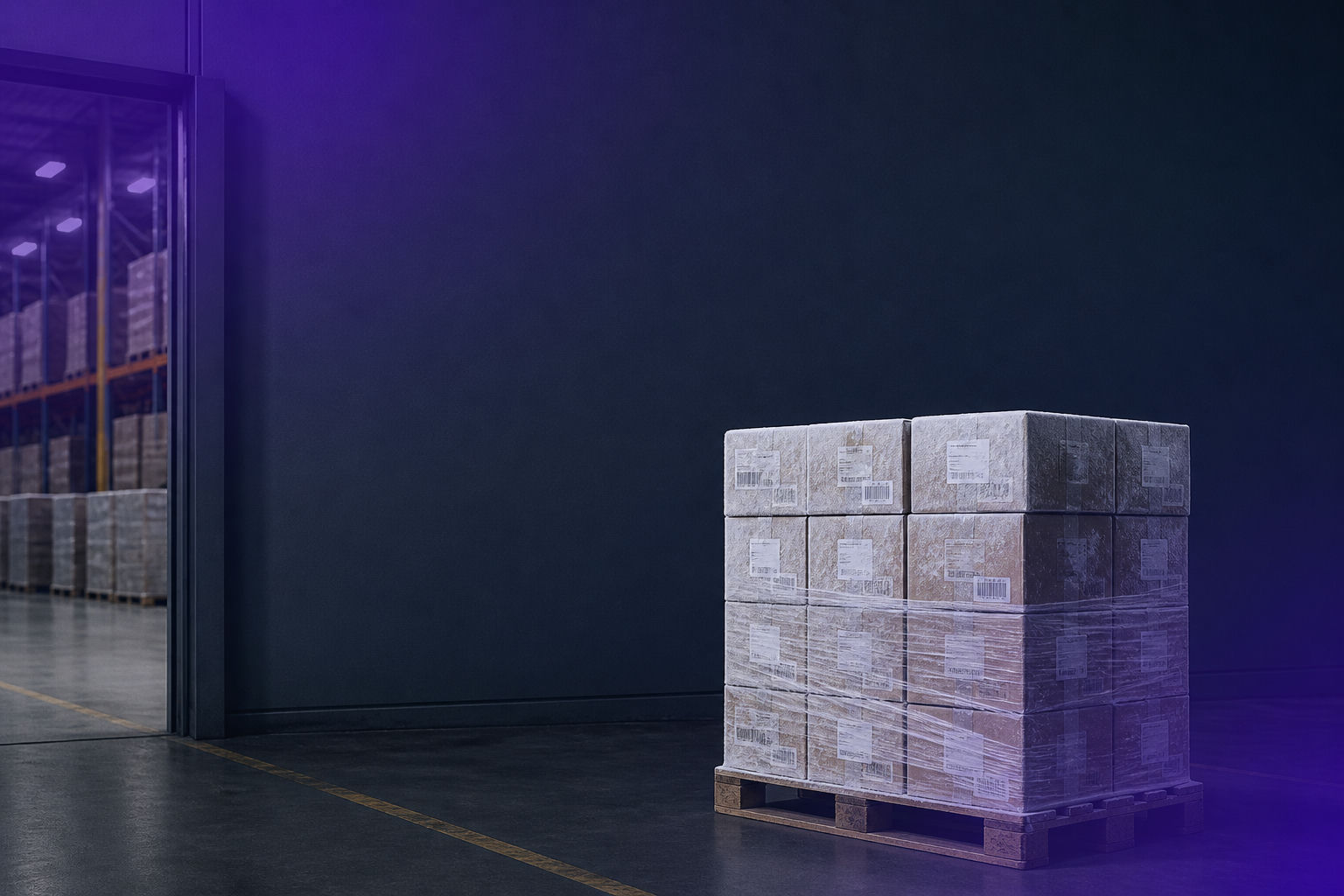
Physical AI improves cold chain quality assurance by making the condition of physical goods visible while those goods are moving, stored, received, or handed off. In cold chain operations, the weak point is often the gap between records: a pallet, tote, tray, or case may look compliant at a scan point, while the condition history between scan points is still hard to prove. That gap is where teams run into quality disputes, spoilage risk, and investigations that take too long.
Physical AI makes goods readable in motion
Physical AI connects physical-world data to decision-making, so products are managed as connected products rather than passive inventory. For supply chains, that matters because intelligence enters the actual flow of goods, not just the planning systems around them, and SupplyChainBrain describes this as a redefinition of how supply chains function, compete, and evolve.
Physical AI in cold chain quality assurance means products, assets, and environments can be monitored as they move, so quality teams can act on condition data rather than wait for a manual check or a delayed exception report.
Quality assurance moves from inspection to evidence
For a cold chain quality leader, the useful shift is practical: continuous condition sensing can create a better record of what happened to a product before a receiver, auditor, store team, or customer finds a problem. The strongest use case is item-level visibility across the messy parts of operations where manual scans are missed, handoffs are disputed, or reusable containers sit idle in the wrong place.
- Temperature-sensitive goods need condition history, not location snapshots alone.
- Reusable assets need dwell and journey context, not just a last-known scan.
- Quality teams need exception evidence that can be reviewed before product is accepted, rejected, or investigated.
- Operations teams need inventory traceability that follows physical goods through real handling conditions.
The foundations of Physical AI: core components
Physical AI depends on a practical chain of capabilities: sensing, perception, reasoning near the point of action, learning from real-world data, plus a way for the system to interact with physical goods or environments. Those components are what turn raw signals into operational decisions, which is why the discussion has to move from definition to mechanism.
Sensing and perception
Sensing and perception are the starting point because Physical AI cannot reason about a carton, pallet, room, vehicle, or production line unless it can detect some part of the physical state. As of 2026, the category combines advances in foundation models, computer vision, autonomous systems, and edge computing to create systems that can perform real-world tasks safely and autonomously, according to an IEEE Tech Futures 2026 session on embodied Physical AI.
In supply chains, perception does not require a camera watching every event. Item-level visibility can come from physical products that can be identified and monitored, condition data attached to goods, and infrastructure that reads signals as products move through ordinary workflows.
- Identity data tells the system what the item or asset is.
- Location or area data tells the system where the item is or where it has been.
- Condition data tells the system whether temperature or handling conditions may have affected quality.
- Time and dwell data tell the system whether goods are waiting too long in the wrong state or place.
Edge computing and real-time reasoning
Edge computing matters because physical operations often cannot wait for a distant system to interpret every signal. The Physical AI era demands low-latency AI applications and real-time interaction with the physical world, a point made in IEEE research on low-latency AI for physical-world interaction.
For cold chain quality assurance, the value of Physical AI is tied to timing. A temperature excursion discovered after unloading can still help with documentation, but an alert or workflow trigger during transit, receiving, or staging can help teams quarantine goods, investigate a lane, or prevent a compromised product from being mixed with compliant inventory.
Machine learning and adaptation
Machine learning gives Physical AI systems a way to improve as they see more real operating patterns. In a warehouse or distribution network, the same rule can behave differently depending on route, building layout, season, carrier handoff, product type, or reusable asset loop.
A useful Physical AI system learns from real-world data instead of assuming that every operation follows the same clean process map. That distinction matters in supply chains because exceptions are common: missed scans, split pallets, partial receipts, delayed returns, empty containers moving through full-product lanes, and products staged in areas that were never meant to be part of the cold chain record.
Action and interaction
Action and interaction are what move Physical AI beyond reporting. Physical AI uses AI to control or interact with the physical world through applications such as autonomous vehicles, smart materials, digital twins, and health monitors, as described by Strategy& in its overview of Physical AI applications.
In cold chain and logistics, action may be modest but valuable. A system can flag a suspect shipment, recommend a receiving decision, update inventory availability, trigger a quality hold, or show that a reusable container is delayed rather than lost. The action may be a workflow change, not physical movement, but the operational value is the same: a better decision while the product is still recoverable.
Key terms in Physical AI: a glossary
Physical AI uses familiar words from AI, sensing, operations, and supply chain systems, but their meaning can blur when they are applied to physical goods. The glossary below keeps the terms grounded in how operators, quality teams, and supply chain leaders actually use them.
Autonomous systems
Autonomous systems are systems that can perform real-world tasks with limited human direction once they are deployed in a defined environment. In a supply chain context, the term can apply to equipment, vehicles, monitoring systems, or decision workflows that respond to physical-world data.
Autonomy does not mean people disappear from operations. It means the system can interpret conditions, detect exceptions, and recommend or take defined actions without waiting for every observation to be manually entered.
Computer vision
Computer vision is the use of machine perception to interpret visual information. In Physical AI, computer vision can help systems understand objects, spaces, movement, and events in the real world, especially where cameras are part of the sensing setup.
For cold chain and inventory operations, computer vision is one perception method among several. Physical AI can also use ambient IoT, cloud-connected IoT Pixels, condition sensing, and other forms of physical-world data to create inventory insights.
Digital twin
A digital twin is a digital representation of a physical asset, product, process, or environment. In Physical AI, a digital twin becomes more useful when it is fed by live or near-live data from the real world rather than being updated only through manual records.
For reusable assets, a digital twin might represent where containers are, how long they dwell in a location, or whether they are moving through the intended loop. For cold chain products, the value comes from connecting condition history to the physical product or shipment that quality teams must evaluate.
Foundation models
Foundation models are large AI models that can support many downstream tasks after being trained on broad data. In Physical AI, they can help systems interpret mixed inputs and reason across complex environments, especially when combined with perception, edge computing, and operational rules.
The practical point is narrower than the term sounds. A supply chain team does not need to understand model architecture to benefit from Physical AI. It needs reliable physical-world data, workflows that use that data, and governance that keeps decisions explainable enough for quality, operations, and compliance teams.
Physical AI in action: from warehouse to cold chain
Physical AI becomes easier to evaluate when the use cases are tied to operational friction: goods move constantly, labor is constrained, and condition or location errors become expensive. As of 2026, the earliest business cases are strongest in environments where a missed handoff, dwell event, or temperature exception can change the cost, quality, or availability of inventory.
Adaptive warehouse automation
Adaptive warehouse automation applies Physical AI to buildings that were not designed around perfect data capture. SupplyChainBrain describes the shift in warehouse operations as allowing systems to adapt to the building rather than forcing the building to be redesigned around them, in its article on how Physical AI reshapes the warehouse.
For operators, the practical result is visibility in the spaces between fixed read points. A warehouse can have strong receiving, picking, and shipping processes while still losing sight of goods in staging lanes, cross-dock moves, returns areas, cooler doors, or temporary overflow. Physical AI helps make those gray zones measurable.
Common warehouse uses include:
- Detecting mismatches between expected and actual inventory.
- Showing where reusable assets dwell too long.
- Improving inventory accuracy without relying only on manual cycle counts.
- Supporting loss prevention by identifying unexplained movement or disappearance.
- Giving teams real-time inventory intelligence before a customer order, shipment, or quality check fails.
Intelligent logistics and autonomous vehicles
Intelligent logistics is one of the first areas where Physical AI has become relevant because the economics are clearer in manufacturing and logistics than in many less structured environments. The World Economic Forum noted in 2026 that Physical AI is arriving first in those areas, with a trajectory that extends toward hospitals, construction sites, farms, and city infrastructure through its Physical AI knowledge monitor.
In logistics, the most valuable signals are often ordinary events that systems fail to capture well: whether the right product is on the right pallet, whether a container left the facility, whether it sat too long at a carrier handoff, and whether its condition stayed within quality expectations. Physical AI turns those signals into operational evidence.
Smart infrastructure and manufacturing
Smart infrastructure and manufacturing use Physical AI where physical conditions affect throughput, quality, safety, or maintenance. As of 2026, this includes settings such as smart factories, energy infrastructure inspection, and other environments where systems need to interpret physical spaces and assets while work is happening.
For supply chain teams, the link to manufacturing is direct. Production quality, packaging condition, staging time, and dispatch accuracy all shape downstream inventory availability. When physical-world data follows goods from production into logistics, the cold chain record becomes less fragmented.
Verifiable cold chain compliance
Verifiable cold chain compliance depends on evidence that travels with the product, asset, or shipment. A static record can show that a process was designed correctly, but quality assurance also needs to know what happened during receiving, loading, dwell, transport, unloading, and storage.
For a deeper discussion of which record matters when product condition is disputed, see Cold Chain Temperature Monitoring: Which Record is Right?. The useful standard is simple: if a quality leader cannot connect a temperature event to the affected physical goods, the investigation becomes slower, more manual, and more vulnerable to disagreement.
What are the barriers to adopting Physical AI?

Physical AI adoption has real-world hurdles because the category touches physical sites, equipment, workflows, and people, not software records alone. As of 2026, IDC identifies major barriers including safety and security requirements, hardware deployment and maintenance costs, regulatory compliance, integration with existing infrastructure, workforce readiness, and public acceptance in its analysis of scaled deployment barriers for Physical AI.
Hardware and maintenance costs can shape the business case
Hardware deployment is often the first constraint because Physical AI touches physical operations. Tags, sensors, gateways, readers, devices, or infrastructure may need to be deployed across warehouses, vehicles, stores, production sites, and return loops.
Cold chain teams should be especially careful about battery maintenance. If every container, pallet, or case-level sensing device creates a recurring battery task, the program can create a new operational burden while trying to solve an old visibility problem.
Integration is where many projects slow down
Integration with existing infrastructure matters because supply chains already run on warehouse management systems, transportation systems, quality systems, ERP records, and carrier handoff processes. Physical AI must feed those workflows rather than become another dashboard that only a few people check.
A good adoption plan answers practical questions before rollout:
- Which physical events are invisible today?
- Which decisions would improve if those events were visible?
- Which systems need the data first: quality, inventory, transportation, receiving, or claims?
- Which users must trust the output before the workflow changes?
- Which compliance requirements define what evidence must be retained?
Workforce readiness affects whether the data gets used
Workforce readiness is not a soft issue. If receivers, warehouse supervisors, quality leads, and transportation teams do not understand what a signal means, they may ignore it or work around it.
Training should focus on decisions, not the technology vocabulary. A receiver needs to know whether a shipment should be accepted, held, inspected, or escalated. A quality lead needs to know whether the condition record is tied to the right physical goods. A loop owner needs to know whether a missing reusable asset is lost, delayed, idle, or sitting in the wrong part of the network.
Getting started with Physical AI in your operations
Physical AI should start with a narrow operational problem where better physical-world data changes a real decision, such as temperature exceptions, receiving accuracy, reusable asset dwell, mis-ships, or inventory variance. The best starting point is usually a flow of goods where the current record is thin, the decision clock is short, and the cost of being wrong is already visible.
Choose one decision first
Wiliot is a Physical AI company that gives organizations continuous, scan-free visibility into the location and condition of every item in their supply chain. Battery-free IoT Pixels capture that data, and the Wiliot Physical AI Platform refines it into actionable insights, predicting problems like shrink, mis-ships, and spoilage, and recommending the next move.
A practical starting point is to choose one flow of goods and define the decision clock. For cold chain teams, that may mean using temperature monitoring to see whether condition data can help accept, hold, investigate, or redirect product before the exception becomes a claims problem.
Operating questions to define
Start with a small set of operating questions:
- Which products or assets create the most quality risk when their condition is unknown?
- Which handoffs create the most disputes?
- Which locations create dwell or visibility gaps?
- Which decision would improve if the team had item-level visibility?
- Which existing system should receive the output first?
The point of Physical AI is to make physical goods readable enough that quality, inventory, and operations teams can make inventory decisions with real-world data while the decision still matters. For cold chain teams, that is the line between discovering a problem after the fact and acting while there is still something useful to do.
Frequently asked questions
What is physical AI and how does it improve cold chain quality assurance?
Physical AI is artificial intelligence connected to the physical world, so goods, assets, machines, and environments can be identified, monitored, and acted on. In cold chain quality assurance, Physical AI improves the record of product condition between manual scans and fixed read points, helping teams investigate temperature issues, verify handoffs, and make faster hold, release, or escalation decisions. Source: Wiliot Temperature Monitoring
What are the key differences between Physical AI and traditional AI or IoT?
Traditional AI often works with digital data that has already been collected, while IoT often focuses on connecting devices and sending signals. Physical AI brings sensing, reasoning, and action closer to physical goods and environments, so connected products can produce physical-world data that supports decisions during real operations. Source: Wiliot Physical AI platform
What are the first industries to apply Physical AI?
As of 2026, manufacturing and logistics are among the first industries applying Physical AI because goods, assets, facilities, and labor flows create clear operational value when they become more visible. Cold chain, grocery, food distribution, and reusable asset operations are natural fits because condition, dwell, and handoff records affect quality and service. Source: Wiliot Reusable Asset Tracking
How does Physical AI change how warehouses operate?
Physical AI changes warehouses by giving teams better visibility into where inventory and assets are, what condition they are in, and whether physical flows match system records. That can improve receiving, reduce inventory variance, support exception handling, and help teams act before a mismatch becomes a shipment, quality, or customer problem. Source: Wiliot Inventory Intelligence
What challenges can slow down the adoption of Physical AI?
Physical AI adoption can slow down when the business case depends on too much new hardware, too much battery maintenance, unclear workflow ownership, or difficult integration with warehouse, transportation, quality, and inventory systems. Teams should start with a defined decision, a specific flow of goods, and a clear owner for acting on the data. Source: Wiliot Physical AI platform
Sources
Every reference cited on this page, in the order Wiliot evidence, related articles, then outside research.
- 1.temperature monitoring (wiliot.com)
- 2.Wiliot Reusable Asset Tracking (wiliot.com)
- 3.Deloitte's explanation of AI systems that interact with the physical world (deloitte.com)
- 4.What is Physical AI and how does it improve cold chain quality assurance? (kkkcdzmhnnqevxhexzpo.supabase.co)
- 5.a redefinition of how supply chains function, compete, and evolve (supplychainbrain.com)
- 6.IEEE Tech Futures 2026 session on embodied Physical AI (yp.ieee.org)
- 7.IEEE research on low-latency AI for physical-world interaction (ieeexplore.ieee.org)
- 8.how Physical AI reshapes the warehouse (supplychainbrain.com)
- 9.its Physical AI knowledge monitor (intelligence.weforum.org)
- 10.The foundations of Physical AI: core components (kkkcdzmhnnqevxhexzpo.supabase.co)