.svg)
Short answer
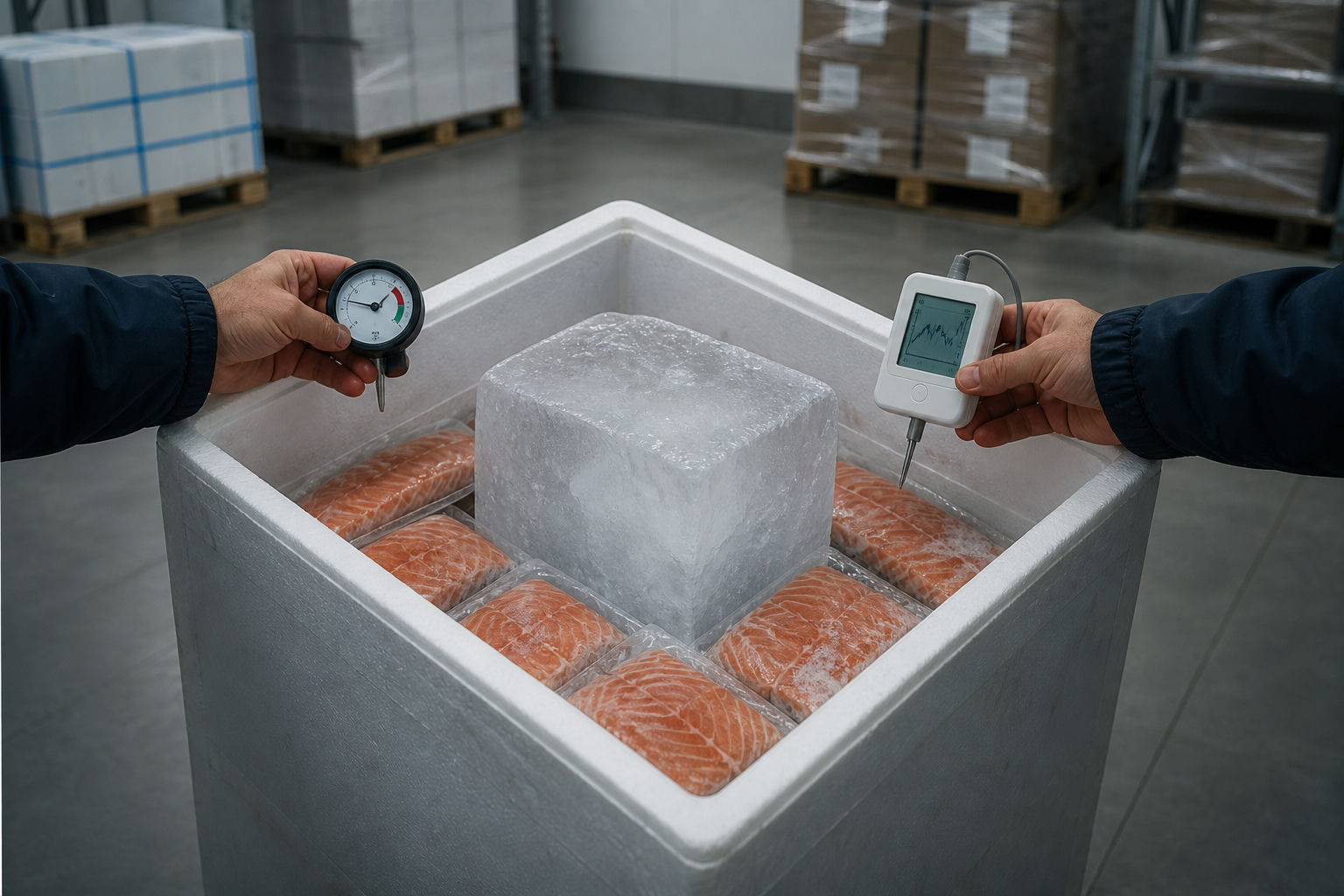
The record that matters most in cold chain temperature monitoring is the one that best reflects the product's real exposure. When records conflict, the safest first move is treating it as a quality event, then asking which record is closest to the product, has enough continuity to show exposure, and is credible enough to support a release decision. Source: Wiliot Temperature Monitoring
Cold chain temperature monitoring uses sensors and loggers, along with connected records, to prove whether temperature-sensitive products stayed inside their required range as they moved from production to consumption. In practice, it combines tools such as data loggers with RFID and Bluetooth Low Energy (BLE) sensors to track and maintain the conditions that protect goods such as pharmaceuticals and produce, as well as frozen food and other sensitive goods, from spoilage and the risk of safety or regulatory failure.
The hard part starts when the records do not line up. A trailer record says the load stayed in range, a case-level sensor says it did not, and a quality lead has to decide whether the product can ship or needs inspection or hold. A cold chain is a specialized supply chain that uses refrigeration to protect goods such as pharmaceuticals and produce, as well as frozen food, so the record that matters most is the one that best reflects the product's real exposure.
What is cold chain temperature monitoring?
It is a product-safety record
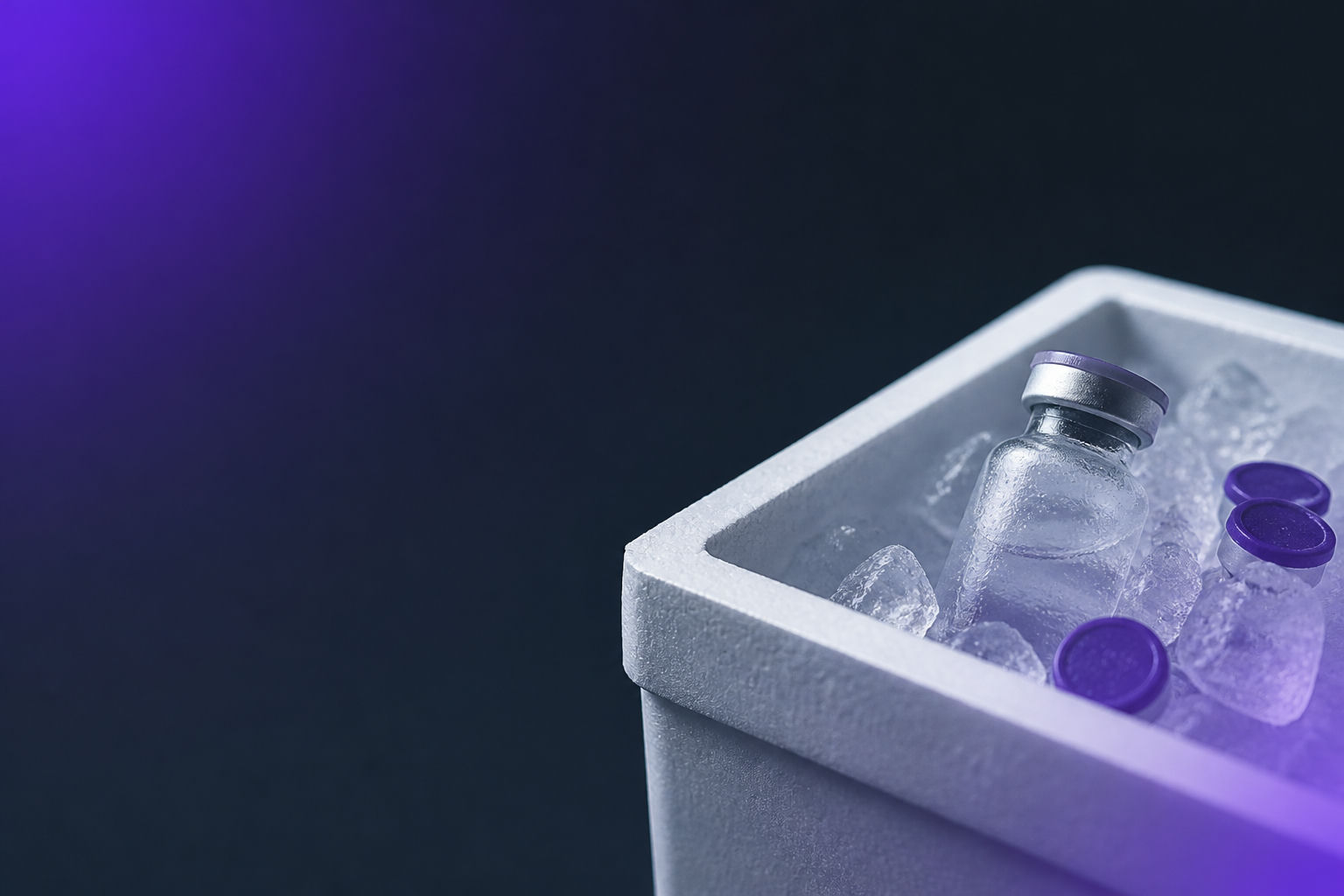
Cold chain temperature monitoring is the evidence trail that shows whether a sensitive product stayed inside its required temperature conditions during storage and handling, including transport. Cold chain logistics includes packaging, storage, transport, and monitoring, and each part matters because it helps keep temperature-sensitive products safe and effective throughout the supply chain.
That evidence has to lead somewhere operational. A temperature record is useful when a team can act on it before product quality is lost, whether that means correcting a storage problem or investigating a carrier handoff, with product held until the exposure is understood.
The hard part is deciding which record to trust
Conflicting temperature records happen because different tools measure different parts of the journey. A warehouse sensor may reflect the room, while a reefer unit may reflect the trailer. A logger or connected item-level sensor may reflect the product or package area more closely.
When records disagree, the safest first move is to treat the disagreement as a quality event, then ask which record is closest to the product, has enough continuity to show exposure, and is credible enough to support a release decision.
That does not mean every disagreement proves product damage. It means the hold decision should start with the record that best represents actual product exposure, while the wider equipment and facility records help explain what happened.
Foundations: key pillars of an unbroken cold chain
Once the hold decision is framed around exposure, the next question is where that exposure could have happened. Cold chain operations create multiple records because the product moves through several controlled environments, each with its own equipment and monitoring points, plus handoffs.
Protective packaging
Protective packaging is the first layer of defense when products move between controlled spaces. In cold chain logistics, packaging can include insulated boxes, gel packs, dry ice, vacuum insulation panels, and phase change materials, all used to reduce temperature change around the product.
That packaging also affects how records should be read. It can create a local product environment that differs from the trailer or room, so a trailer probe may show one condition while a package-level sensor sees another, especially during loading, unloading, door openings, or dwell time outside a controlled room.
Controlled storage
Controlled storage is where refrigerated warehouses, cold rooms, refrigeration systems, and temperature sensors maintain the product's required temperature range. Storage records can be highly useful because the environment is more stable than transport, but they still describe an area rather than every item inside it.
A cold room record can show that the facility performed properly while still missing a localized issue around a pallet, tote, case, or door-adjacent position. Storage monitoring and product-proximate sensing therefore serve different roles in the same evidence chain.
Refrigerated transport
Refrigerated transport adds movement, loading time, carrier handoffs, route variation, and equipment maintenance to the problem. For third-party logistics providers, cold chain infrastructure and temperature monitoring, including infrastructure maintenance, are major operational challenges.
Those challenges explain why transport records are necessary but incomplete. A reefer unit can show how the equipment behaved, while product quality teams still need records that reflect what the goods actually experienced during the route and at handoff points.
The unbroken chain depends on all three
An unbroken cold chain is a continuous sequence of refrigerated production through storage and distribution activities, supported by equipment and logistics that maintain the desired low-temperature interval. In practice, no single record type covers everything.
The three pillars create a layered view:
- Packaging helps protect the product between controlled spaces.
- Storage records show whether warehouses and cold rooms held the right conditions.
- Transport records show whether refrigerated movement and carrier handoffs stayed under control.
- Product-proximate records help resolve whether the goods themselves were exposed.
Glossary of terms
Before the technology details, it helps to clean up the vocabulary. Cold chain terminology is often used loosely, and loose language is one reason teams argue over records instead of resolving the quality call.
Terms for the chain
- Cold chain: A refrigerated supply chain for goods that are perishable or temperature-sensitive, such as pharmaceuticals, produce, frozen food, chemicals, or other sensitive products.
- Unbroken cold chain: A continuous sequence of controlled production through storage and distribution activities that keeps products within the intended temperature interval.
- Temperature excursion: A period when a product, space, or transport environment is recorded outside its required temperature range.
- Hold decision: A quality decision to pause release or shipment while the exposure record is reviewed.
Terms for the records
- Digital data logger: A device that records temperature over time, often used inside storage units or shipments, including packages, to create a continuous record.
- Equipment Monitoring System, or EMS: A monitoring system for cold chain equipment that uses devices to communicate raw data from an appliance's integrated logger, either locally or over the Internet.
- RFID: A radio-frequency identification method used to identify tagged goods or assets. In cold chain work, RFID may be part of a broader visibility system.
- Bluetooth Low Energy, or BLE: A wireless communication method often used by small sensors to share condition or location data over short ranges.
- IoT sensor: A connected sensor used to collect and communicate data such as temperature fluctuations and other condition signals that affect quality and shelf life.
The tech that powers temperature monitoring (as of 2026)
With the operating model and vocabulary in place, the technology choices become easier to judge. Temperature monitoring technology falls into a few broad categories, and each category answers a different operational question.
Digital data loggers
Digital data loggers are a familiar starting point because they create a time-stamped temperature history for a storage unit or shipment, including a product area. NIST research has supported a shift in vaccine management toward calibrated, traceable, continuously recording temperature monitoring devices inside vaccine refrigerators, replacing analog devices and handwritten records.
The same logic applies beyond vaccines. A handwritten reading can miss an overnight excursion, while a continuous logger can show when the event happened, how long it lasted, and how severe it was, which is the kind of detail a quality team needs when release is in question.
Equipment monitoring systems
Equipment Monitoring Systems focus on the appliance or asset that creates the controlled environment. Starting in 2026, WHO prequalification materials state that all vaccine refrigerators are required to have EMS, and Equipment Monitoring Devices communicate monitored cold chain data locally or remotely by sourcing raw data from the appliance's integrated logger.
EMS records are especially useful when the question is whether the refrigerator or freezer, or a cold room, performed correctly. They can point to equipment behavior, malfunction patterns, and remote failure analysis, including temperature and other equipment performance parameters.
IoT sensors: BLE, RFID, cellular, and ambient IoT
IoT sensors extend monitoring beyond fixed equipment by creating more frequent, distributed signals across transport and handling. IoT technologies are used in cold chain logistics to monitor transport by tracking temperature fluctuations, humidity, ethylene levels, and other critical factors that affect product quality and shelf life.
The main categories are best understood by the job they do:
- RFID helps identify tagged goods or assets, especially when the operation needs identity and movement records.
- BLE sensors can communicate condition readings through nearby Bluetooth infrastructure, which can be useful for item-level or package-level sensing.
- Cellular sensors can send data from shipments without relying only on a facility reader or manual scan.
- Ambient IoT uses very small connected devices that can support physical products that can be identified and monitored without a per-tag battery-maintenance program.
Continuous data changes the quality conversation
Continuous condition sensing changes the quality conversation because it shows what happened between manual scans, inspections, or equipment checks. WHO materials on immunization supply chains state that continuous temperature monitoring can improve vaccine handling quality, detect malfunctioning equipment, and reduce damage from temperature fluctuations.
For quality leaders, the strongest monitoring setup is usually layered. Equipment and transport records explain the controlled environment and the journey, while product-proximate records explain the exposure that matters most to release decisions.
When records disagree: making the right quality call

Because each technology sees a different part of the operation, conflicts are inevitable. Record disagreement should be treated as a quality event, because it may be the only sign that the product's actual exposure differed from the equipment's reported condition.
Start with the record closest to the product
The record closest to the product should carry the most weight in the first hold decision, especially when it is continuous, traceable, and tied to the product, package, pallet, tote, or shipment under review. A trailer record can show air temperature near equipment, but it cannot always prove what every item experienced.
That is why item-level visibility matters. Wiliot is a Physical AI company that gives organizations continuous, scan-free visibility into the location and condition of every item in their supply chain. Battery-free IoT Pixels capture that data, and the Wiliot Physical AI Platform refines it into actionable insights, predicting problems like shrink and spoilage, as well as mis-ships, and recommending the next move.
Use the wider records to explain the event
A product-level or package-level excursion record may answer the hold question, but the wider records still matter. Equipment logs plus warehouse and transport records help quality and operations teams understand whether the issue came from a refrigerator, a loading delay, a door event, a route problem, or a handoff gap.
A sensible quality review should separate three questions:
- Did the product-proximate record show an exposure?
- Did the equipment or facility record confirm, contradict, or explain that exposure?
- Is the record strong enough to release the product, or should the product stay on hold?
Do not average away a quality risk
Averaging records can hide the event that matters. If a product spent time outside its required range, a route-average temperature or room-average condition may make the journey look acceptable while the product-proximate record shows a real excursion.
Inventory and quality teams see the same pattern when inventory records disagree with physical reality. If the operating record and the item record conflict, the next step is to improve inventory accuracy and traceability, and this related guide on how to calculate inventory accuracy explains the same discipline from an inventory records angle.
Make the hold rule explicit before the exception happens
A disagreement is much easier to handle when the team has already defined the order of trust. The rule does not need to be complicated, but it does need to be written into operating practice before a shipment is waiting at the dock.
A practical order of review looks like this:
- Treat a credible product-proximate excursion as a hold trigger.
- Use equipment and facility records to confirm or explain the exposure.
- Check whether the monitoring device was assigned to the correct product or shipment, or to the correct storage area.
- Review the timing of loading, dwell, transport, and receiving events.
- Release only when the evidence supports the required quality standard.
How to choose your monitoring solution
After the hold rule is clear, technology selection becomes a matter of evidence quality. Monitoring solution selection should start with the quality decision you need to defend, rather than the sensor category that sounds most advanced.
Match the tool to the decision
As of January 2026, food companies covered by the Food Safety Modernization Act traceability rule need systems that can provide required traceability information, and technologies that support data collection and temperature monitoring are directly relevant to that requirement. That makes the monitoring record part of compliance posture rather than a side report for operations.
Different tools fit different decisions:
- Use digital data loggers when you need a continuous temperature history for a unit, package, storage point, or shipment.
- Use EMS when you need to monitor refrigeration equipment and detect appliance-level issues.
- Use BLE, RFID, cellular, or ambient IoT when you need more granular identity, movement, and condition signals across goods or assets.
- Use item-level visibility when release or hold decisions, including investigations, depend on what the product itself likely experienced.
Choose for evidence quality, not sensor count
More sensors do not automatically create better decisions. The useful system is the one that creates a clear chain of evidence from product identity through condition history into operational action.
For organizations that need continuous condition sensing across physical goods, temperature monitoring for connected products can give quality and operations teams a more product-proximate record. Wiliot's Inventory Intelligence solution also supports the broader need to make inventory decisions with real-world data, especially when condition, location, and availability need to be understood together.
The best fit is usually a layered monitoring model: infrastructure records for equipment, journey records for transport, and item-level records for the hold decision. When those records disagree, the product should not move just because the highest-level record looks clean.
Frequently asked questions
What temperature monitoring solution is suitable for cold chain operations?
A suitable solution usually combines data loggers and equipment monitoring with RFID or BLE-based identification and IoT sensors, depending on the product risk and the decision you need to support. Data loggers are useful for continuous temperature history, EMS helps with refrigerators and other cold chain equipment, while IoT sensors can add more granular condition data during storage and transport.
Source: Wiliot Temperature Monitoring
Why is having continuous temperature data so important for my business?
Continuous temperature data helps catch problems that manual checks can miss, especially during storage and transport, including handoffs. It can identify equipment malfunctions and show when temperature fluctuations happened, giving quality teams a stronger record for deciding whether a product can ship or should stay on hold.
Source: Wiliot Temperature Monitoring
How do different monitoring tools like data loggers and IoT sensors compare?
Data loggers create a continuous record for a defined unit or shipment, or for a storage area, which makes them useful for quality documentation. EMS focuses on cold chain equipment and appliance performance. IoT sensors can add distributed condition and identity signals across products and packages, or assets, which helps when teams need more granular visibility than a room or trailer record can provide.
Source: Wiliot Automated Receiving
Can I monitor more than just temperature in my cold chain?
Yes, some cold chain systems can monitor additional parameters, although temperature remains the central safety indicator for many programs. Depending on the equipment and use case, teams may also monitor signals such as voltage input, humidity, compressor function, ethylene levels, or other factors tied to product quality and shelf life.
Source: Wiliot IoT Pixels
What regulations should I be aware of for food traceability as of 2026?
As of January 2026, the Food Safety Modernization Act traceability rule is a major reference point for covered foods in the United States, with a compliance date of January 20, 2026. At a practical level, that has made traceability information, data collection, and temperature monitoring more important parts of cold chain operating practice.
Source: Wiliot Physical AI platform
Sources
Every reference cited on this page, in the order Wiliot evidence, related articles, then outside research.
- 1.temperature monitoring for connected products (wiliot.com)
- 2.Wiliot Automated Receiving (wiliot.com)
- 3.Wiliot IoT Pixels (wiliot.com)
- 4.Wiliot Physical AI platform (wiliot.com)
- 5.cold chain is a specialized supply chain that uses refrigeration (en.wikipedia.org)
- 6.What is cold chain temperature monitoring? (kkkcdzmhnnqevxhexzpo.supabase.co)
- 7.each part matters because it helps keep temperature-sensitive products safe and effective (inboundlogistics.com)
- 8.calibrated, traceable, continuously recording temperature monitoring devices (nist.gov)
- 9.Equipment Monitoring Devices communicate monitored cold chain data (extranet.who.int)
- 10.continuous temperature monitoring can improve vaccine handling quality (terrance.who.int)
- 11.Foundations: key pillars of an unbroken cold chain (kkkcdzmhnnqevxhexzpo.supabase.co)
- 12.technologies that support data collection and temperature monitoring (inboundlogistics.com)