.svg)
Short answer
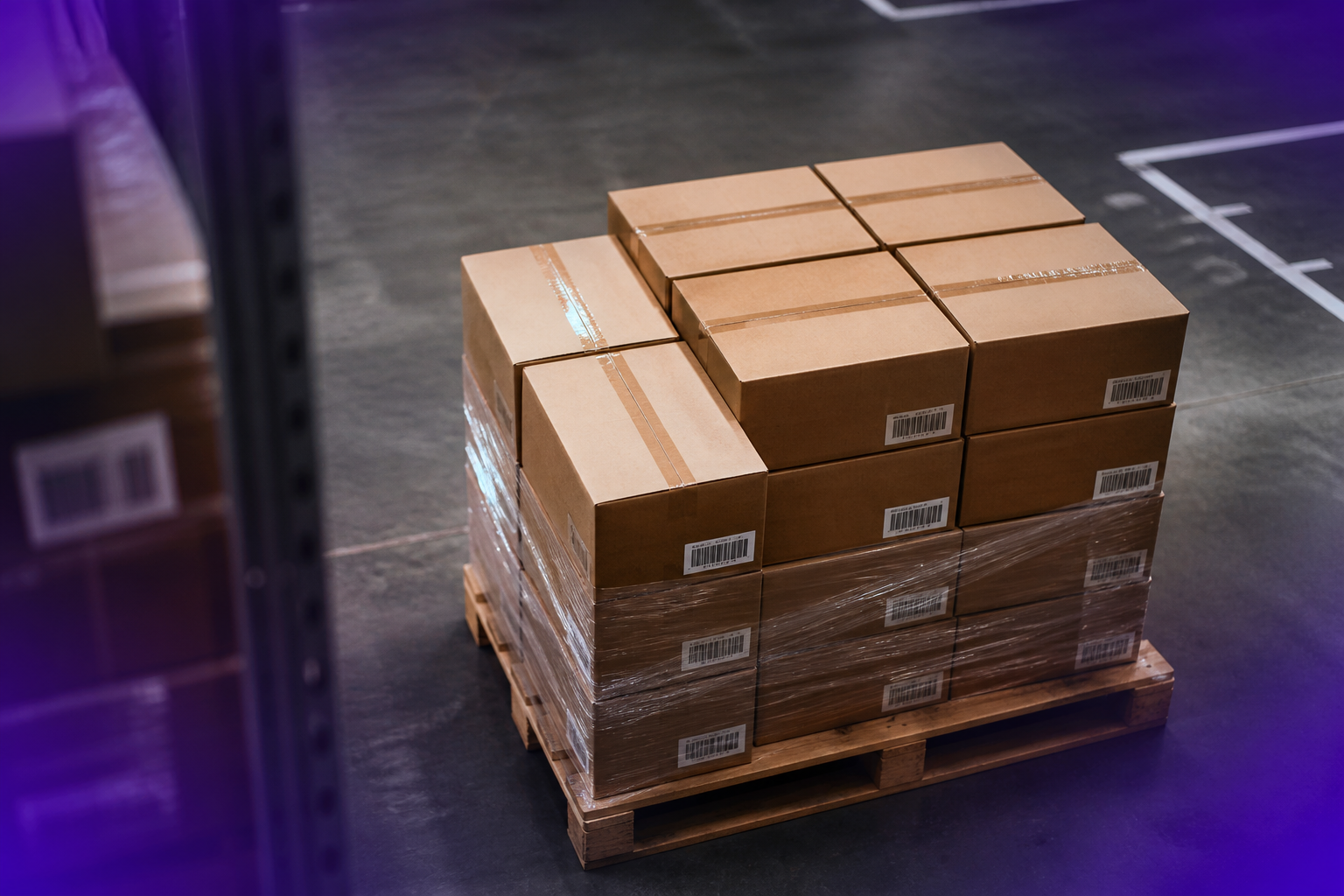
Real-time SKU tracking is how the warehouse learns that the receipt says 50 but the floor only has 48, indicating the gap started at receiving rather than later. This system continuously reads each stock keeping unit's location and movement, checking physical counts against system records using technologies like IoT, BLE, RFID, and Physical AI. It aims to reduce the gap between physical movement and system awareness, providing continuous item-level visibility. Source: Wiliot Inventory Intelligence
What is real-time SKU tracking?

Real-time SKU tracking continuously reads each stock keeping unit's location and movement while checking whether the physical count still matches the system record. It uses technologies such as IoT, BLE, RFID, and Physical AI to give teams continuous item-level visibility from production to delivery, so inventory gaps show up while they can still be fixed. In the broader inventory discipline, real-time inventory tracking uses barcode scanning and RFID to monitor inventory levels and movements continuously, giving teams up-to-date information for production and fulfillment decisions, including shipping and replenishment.
The simple definition
Real-time SKU tracking means the warehouse does not have to wait for a worker to scan a barcode, finish a cycle count, or reconcile a report before it knows that a SKU moved. The tracking signal can come from a scan, an RFID read, an IoT device, a BLE-based read, or a Physical AI platform that creates item-level visibility between the usual checkpoints.
That matters because the SKU is the unit people actually argue about at the dock and in the pick face during replenishment. A pallet ID can be correct while two cases on the pallet are wrong, and a purchase order can close cleanly while the physical shelf quietly drifts away from the WMS record.
The parts that make it real time
A real-time SKU tracking setup usually combines several layers:
- A barcode, RFID tag, IoT Pixel, or other identifier connects the physical product to a digital record.
- Handheld scanners, dock-door readers, BLE infrastructure, or cloud-connected IoT Pixels capture movement or condition data.
- A WMS, ERP, or inventory platform receives those reads and updates the inventory record.
- Exception logic flags mismatches, missing items, mis-ships, or unusual SKU-level movement before the discrepancy turns into a manual search.
In plain English, real-time tracking is how the warehouse learns that the receipt says 50, the floor only has 48, and the gap started at receiving rather than three touches later.
The core problem: how a 2-item gap becomes a ghost hunt
That definition only matters because the smallest inventory mismatch can spread through the operation faster than most teams can find it.
The gap starts small
Inventory discrepancy sounds abstract until it lands as a two-item gap on a receiving record. A supplier shipment is received as 50 units, the WMS accepts 50, and the putaway task moves forward. If the physical count was actually 48, the system has already created two items that can be promised, allocated, or picked even though they are not in the building.
That is the ghost hunt. The problem has already escaped receiving because every later step trusts the wrong starting point. A picker checks the bin, then supervisors and inventory control start checking the adjacent bay and transaction history, and the warehouse may still end up with a clean system trail for inventory that never existed.
Why fixed events leave blind spots
Traditional inventory records often depend on captured events:
- A worker scans a barcode at receiving.
- A putaway move posts to the WMS.
- A replenishment task updates the pick face.
- A cycle count corrects the record after a discrepancy is found.
- A shipment confirmation closes the order.
Those events are useful, but they are separated by labor, elapsed time, and physical movement. If a SKU is misplaced or shorted, or if a read is wrong between events, the system may stay confident while the floor has already changed.
Accuracy changes the search
The difference between periodic counting and automated reads is not subtle. In retail inventory environments, RFID accuracy rates are typically 99.5% compared with manual counts where 70% accuracy was often considered acceptable, and the same source describes shipments passing through dock doors being read automatically rather than relying on manual scans.
Those figures explain why a two-item gap can be so expensive to chase. If the read happens at the dock door, the exception appears close to the moment it was created. If the read waits for a later count, the team has to reconstruct a chain of events after the physical evidence has moved.
Why supply chains make the gap worse
The same gap gets harder to manage once inventory moves across a broader network. Demand changes, route changes, disruptions, and compliance issues can complicate the movement of goods, which is why supply chain processes require monitoring and ongoing optimization using real-time data for analytical insights, automation, and better decision-making.
In that setting, the 48-vs-50 problem becomes more than a warehouse nuisance. The wrong record can affect replenishment, transportation planning, customer promises, and the confidence operations leaders have in their own systems.
Key terms in real-time SKU tracking
Once the problem is clear, the vocabulary matters because each tool sees a different part of the physical flow.
RFID (radio-frequency identification)
RFID uses radio-frequency identification tags and readers to identify items without requiring a person to scan each barcode one at a time. In supply chain workflows, RFID tags can be used across raw material scanning, product completion, transportation, and storage, which supports faster and more accurate data collection across multiple steps.
The practical value is that RFID can read items as they pass a fixed point, such as a dock door. That makes it especially relevant when the warehouse needs to verify that what arrived, moved, or shipped matches the expected SKU-level record.
IoT (internet of things) tags/sensors
IoT devices are connected physical devices that can report information about inventory, assets, or conditions. In inventory management research as of 2024, Internet-of-Things devices are used for real-time tracking, alongside RFID technology, predictive analytics, machine learning, and other warehouse technologies used for faster identification and data collection.
For SKU tracking, the important shift is that the product or container can produce data rather than waiting passively for a human transaction. That data can help confirm presence and movement and, where the device supports it, condition.
BLE (Bluetooth Low Energy)
BLE is the Bluetooth-based communication method often used when tagged goods need to be read through compatible infrastructure. For warehouse teams, the plain-English point is that BLE can help tags or IoT Pixels communicate without turning every inventory check into a handheld scan.
A BLE-based approach is most useful when the operation already has, or can reasonably support, Bluetooth reading infrastructure in the areas where inventory moves. It fits the same operational goal as the other tools in this guide: reduce the gap between physical movement and system awareness.
Physical AI
Physical AI reads physical-world data continuously at item level, giving operators visibility into the gaps between manual scans and fixed read points. As of 2026, real-time inventory intelligence is part of a broader class of Physical AI technologies being discussed for fulfillment, distribution, and logistics.
In SKU tracking, Physical AI is useful because the problem is physical before it is digital. Inventory exists, moves, gets misplaced, gets shorted, or gets shipped, and the system needs a dependable way to read that physical reality with less delay.
WMS/ERP integration
WMS/ERP integration is the connection between real-time tracking reads and the systems that run receiving, putaway, replenishment, allocation, and shipment confirmation. Without that connection, a reader may know that an item moved, while the operational system still makes decisions from stale records.
The strongest use case is inventory data that updates the workflows inventory control, warehouse operations, transportation, and customer service already depend on. A separate dashboard can be useful, but only if the core operating record changes when the floor changes.
What tools can provide real-time SKU tracking in a warehouse?
With the terms in place, the tool choice should start with the failure mode, not with a preferred device.
Start with the tracking job, not the device
Warehouse tracking tools fall into a few practical categories:
- Barcode and perpetual inventory systems work best for event-based updates where workers scan each movement.
- RFID readers and tags work best for automated reads through fixed points such as receiving or shipping doors.
- IoT devices and sensors work best when inventory or assets need to report presence, movement, or condition data.
- BLE-based tags or IoT Pixels work best when Bluetooth infrastructure can read tagged goods across operational zones.
- Physical AI platforms work best when the operation needs item-level visibility between the moments a barcode scan or fixed RFID read would normally occur.
- WMS and ERP integrations are required when the tracking signal needs to change the inventory record, rather than appear only in a separate system.
The right answer depends on what you are trying to see. A warehouse that mainly loses confidence at dock doors may start with fixed automated reads. A network with discrepancies between receiving and storage before outbound staging needs broader visibility across the path a SKU takes.
Barcode and cloud inventory systems
Barcode-based tracking is still a useful foundation because it ties a physical scan to a system update. Perpetual inventory systems use barcodes and cloud software to update inventory levels in real time, which supports tracking accuracy and inventory planning when scans are performed correctly and consistently.
Its weakness is labor dependence. A barcode does not report that it was missed, misread, or moved without a scan, so barcodes work best when the process is disciplined, movement points are limited, and the business can tolerate visibility that depends on human action.
RFID for automated movement verification
RFID tracking reduces the need for item-by-item manual scans. A common warehouse pattern is to read tagged goods automatically as they move through a portal, dock door, or other fixed read zone, which helps verify that the physical movement matches the expected system event.
RFID is especially useful where the question is, "Did the right goods pass this point?" That makes it relevant for receiving, shipping, staging, and transfer verification. It may still need thoughtful placement of readers and tags, but the operating idea is simple: capture the movement while it happens.
IoT and BLE for connected inventory
Connected products can carry more context than a conventional barcode. IoT devices are used for real-time tracking, and BLE can provide a practical communication path when goods need to be read through compatible Bluetooth infrastructure.
For warehouse leaders, the value is visibility without requiring every touch to become a manual transaction. A tagged item, case, tote, or pallet can be identified and monitored as it moves, which helps close the time gap between physical movement and the inventory record.
Physical AI for scan-free item-level visibility
Item-level visibility becomes more important when the warehouse needs to know what happened between the normal read points. Physical AI and inventory tools can build probabilistic models, detect SKU-level anomalies, and flag edge cases without rigid rulesets, according to analysis of how AI is turning inventory data into a strategic advantage.
Where Wiliot fits
Wiliot is a Physical AI company that gives organizations continuous, scan-free visibility into the location and condition of every item in their supply chain. Battery-free IoT Pixels capture that data, and the Wiliot Physical AI Platform refines it into actionable insights, predicting problems like shrink and spoilage as well as mis-ships, and recommending the next move.
The platform's real-time inventory intelligence is designed for the inventory gap this guide has been circling: the space between a clean system transaction and the messier physical truth on the floor. Battery-free IoT Pixels harvest ambient RF energy and are read over existing Bluetooth infrastructure, which helps physical products become connected products without turning each inventory check into a scan.
How to match tool to warehouse environment
Use the tool category that matches the failure mode:
- When missed manual scans are the problem, consider RFID or IoT-based reads that reduce dependence on handheld activity.
- When dock-door verification is the problem, fixed RFID read points can confirm movement at receiving, transfer, or shipping.
- When inventory drifting between events is the problem, Physical AI and connected products can create item-level visibility in the gaps.
- When system trust is the problem, WMS and ERP integration matter as much as the tag because inventory decisions still flow through those systems.
- When the problem includes product condition, IoT Pixels and continuous condition sensing can add context beyond basic presence.
Key benefits: from accuracy to efficiency

The business case follows directly from the 48-vs-50 problem: better SKU tracking reduces the distance between what the system says and what the floor can actually support.
Accuracy becomes operational, not periodic
Inventory accuracy improves when the system sees more of the physical movement that creates errors. RFID can automate reads at movement points, IoT devices can support real-time tracking, and Physical AI can add scan-free item-level visibility between the usual events.
That shifts accuracy from a cleanup activity to an operating condition. Instead of waiting for a cycle count to prove the record is wrong, the warehouse can detect an exception closer to the time and place where the mismatch appeared.
Fewer stockout surprises
Inventory availability depends on visibility across the network and across multiple SKUs. Companies need that visibility to forecast efficiently and provide on-shelf availability, especially when goods move through several nodes before reaching the customer-facing shelf or fulfillment point.
For a distribution leader, that means SKU tracking is tied directly to service. If the system believes two missing units are available, replenishment and allocation logic can make promises the floor cannot keep. Real-time SKU tracking reduces that gap by keeping the digital record closer to the physical count.
Better decisions from a shared control view
Real-time visibility becomes more useful when it feeds a shared operating view. Centralized inventory control towers consolidate data across the network, use advanced analytics, and provide real-time visibility for agile decision-making in unpredictable operating conditions.
The warehouse benefit is practical. Inventory control, transportation, replenishment, and customer service are no longer debating different versions of the same SKU position. They can work from a record that reflects more of the real-world movement behind the number.
Less labor lost to reconciliation
The labor case is straightforward:
- Fewer blind spots mean fewer emergency searches.
- Automated reads reduce dependence on repeated manual scans.
- Earlier exception detection narrows the search area.
- SKU-level anomaly detection helps inventory teams focus on the records most likely to be wrong.
- Better inventory traceability supports faster root-cause analysis after a mismatch.
The result is a better use of skilled inventory teams. They spend less time proving the obvious and more time fixing the process that created the error.
Putting it together: how to stop the ghost hunt before it starts
The path from tool selection to business value is exception handling. Real-time SKU tracking works when it tells the operation which mismatch matters and where it started, then gives the team a next step before the error reaches the customer.
Build the system around exceptions
Exception-first design is the practical way to think about real-time SKU tracking. The goal is not to collect data for its own sake. The goal is to know when the receipt says 50, the building has 48, and the mismatch needs attention before it becomes a customer-facing promise or a shipment error.
That means the best tracking setup is the one that answers four operational questions:
- What item or SKU is this?
- Where was it last seen or read?
- Does the physical movement match the expected system event?
- What exception should the team handle first?
Keep the WMS record close to the floor
System trust improves when physical-world data updates the tools teams already use. If the tracking signal finds the discrepancy but the WMS still allocates against the wrong balance, the ghost hunt continues under a different name.
A strong implementation path usually starts with the highest-friction gap. That could be receiving, automated shipment verification, pallet movement, reusable asset tracking, or SKU-level discrepancies that repeatedly turn into manual searches. If the issue looks like phantom stock, this related guide on what phantom inventory is and why it matters is a useful next step.
Choose visibility that matches the risk
Real-time SKU tracking is not one tool. It is a visibility model. Barcode systems, RFID, IoT devices, BLE infrastructure, Physical AI, and WMS/ERP integrations all play different roles, and the right mix depends on where the record stops matching the floor.
The 48-vs-50 receipt is a useful test because it strips the problem down to its operational truth. If the system cannot tell where those two units disappeared, it is not giving the team real-time inventory intelligence. It is giving them a delayed argument.
Frequently asked questions
What tools can I use to get real-time SKU tracking in my warehouse?
You can use barcode and cloud inventory systems, RFID, IoT devices, BLE-based tags or IoT Pixels, Physical AI platforms, and WMS or ERP integrations. Barcodes work well for disciplined scan-based workflows, RFID helps automate movement verification, IoT and BLE support connected inventory reads, and Physical AI adds continuous, scan-free item-level visibility between manual scans and fixed read points.
Source: Wiliot IoT Pixels
How do tracking tags or stickers improve inventory visibility over traditional barcodes?
Tracking tags improve visibility because they can reduce dependence on one-at-a-time manual scans. RFID, for example, can read goods as they pass through a dock door, which helps verify that the right items moved through the right point. IoT Pixels go further by giving physical products a digital identity and supporting item-level visibility through compatible infrastructure.
Source: Wiliot IoT Pixels
What are the main advantages of using BLE for asset tracking in a retail store?
BLE can help tagged assets communicate through Bluetooth infrastructure, which is useful when a store or warehouse wants inventory reads without asking workers to scan every item by hand. In a retail setting, that can support inventory availability, reduce manual checking, and help teams find gaps between the item record and the physical product.
Source: Wiliot Inventory Intelligence
How can real-time visibility in my supply chain help prevent stockouts?
Real-time visibility helps prevent stockouts by keeping inventory records closer to what is physically available across locations and SKUs. When teams can see inventory movement and exceptions earlier, they can make better replenishment, allocation, and forecasting decisions rather than discovering the problem after the shelf, pick face, or order promise is already short.
Source: Wiliot Inventory Intelligence
How does Physical AI help find inventory problems that other systems miss?
Physical AI helps by reading physical-world data continuously at item level, especially in the gaps between manual scans and fixed read points. That matters when a SKU is misplaced, shorted, mis-shipped, or drifting away from the system record. Instead of waiting for a later count, the platform can surface anomalies and recommend the next action.
Source: Wiliot IoT Pixels
Sources
Every reference cited on this page, in the order Wiliot evidence, related articles, then outside research.
- 1.real-time inventory intelligence (wiliot.com)
- 2.Wiliot IoT Pixels (wiliot.com)
- 3.What is real-time SKU tracking? (kkkcdzmhnnqevxhexzpo.supabase.co)
- 4.inventory (retaildive.com)
- 5.real-time inventory tracking uses barcode scanning and RFID (inboundlogistics.com)
- 6.real-time inventory intelligence is part of a broader class of Physical AI technologies (supplychainbrain.com)
- 7.analysis of how AI is turning inventory data into a strategic advantage (supplychainbrain.com)
- 8.The core problem: how a 2-item gap becomes a ghost hunt (kkkcdzmhnnqevxhexzpo.supabase.co)