

Short answer
A Bluetooth beacon is a compact transmitter that continuously broadcasts a unique identifier or sensor telemetry over Bluetooth Low Energy to nearby receivers. In supply chain quality control, these automated, scan-free broadcasts create timestamped evidence of an asset's location, dwell time, and handling conditions across critical checkpoints without requiring manual scans. Source: Wiliot IoT Pixels
A Bluetooth beacon is a compact hardware transmitter that uses Bluetooth Low Energy (BLE) to continuously broadcast a unique identifier or sensor telemetry to nearby receivers, enabling automated real-time location, dwell, and condition tracking without manual scanning. That definition matches the standard description of Bluetooth beacons as BLE hardware transmitters that broadcast identifiers to nearby devices.
What is a Bluetooth beacon? Direct definition and core architecture
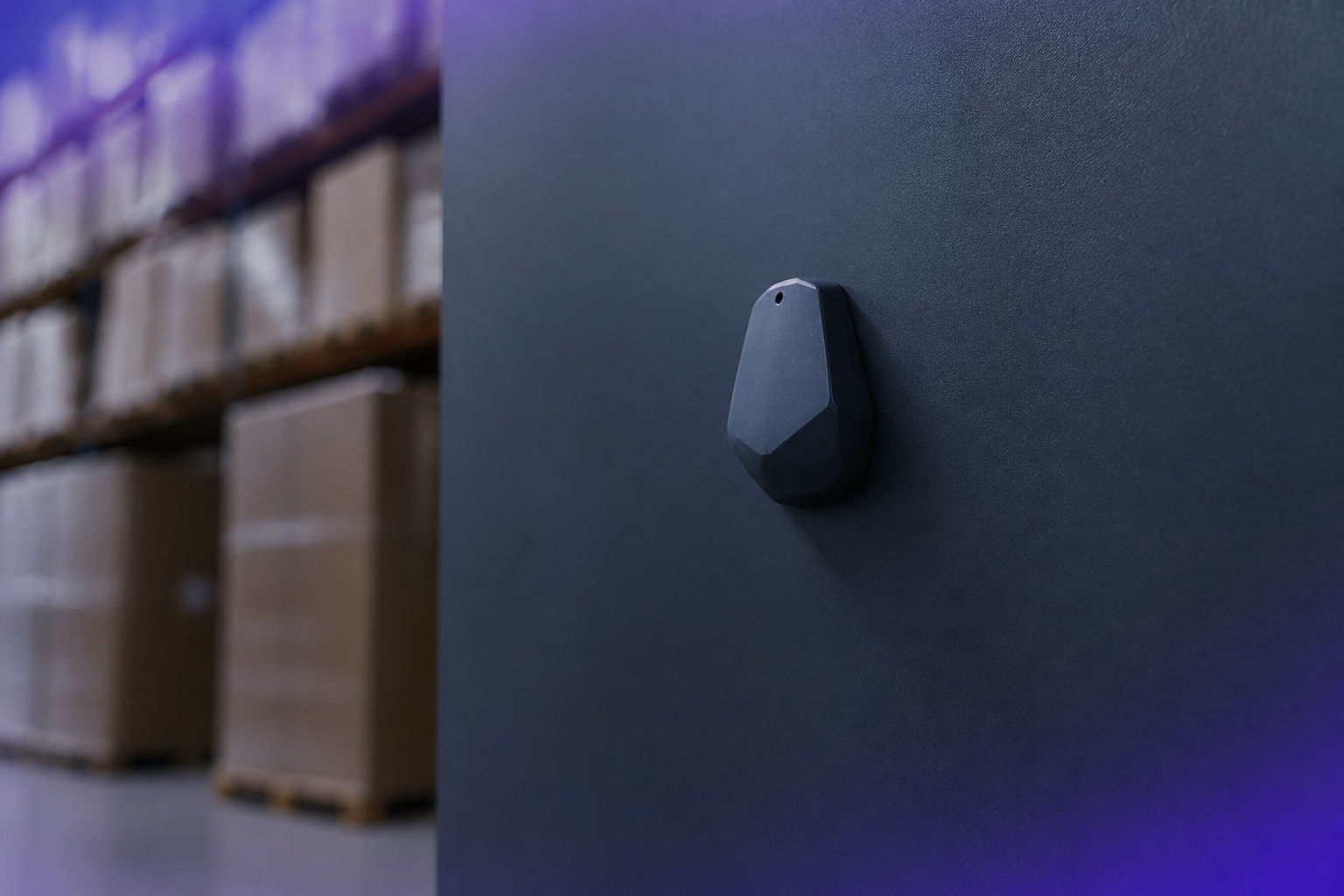
A Bluetooth beacon is best understood as a small radio tag that speaks first. It does not wait for a worker to scan it, and it does not need a standard Bluetooth pairing session before nearby receivers can hear its broadcast.
The direct answer: how BLE beaconing differs from paired Bluetooth
For anyone asking what is a bluetooth beacon in a warehouse or cold-chain quality setting, the useful answer starts with its one-way behavior. A beacon broadcasts a short BLE advertising message, and a receiver, such as a phone, gateway, bridge, or edge node, listens for that message.
That is different from the Bluetooth most people know from headphones or keyboards. Paired Bluetooth creates a two-way relationship between devices, while beaconing keeps the transmitter's job narrow: send an identifier and related bytes, then let the receiver decide what that sighting means.
A beacon does not prove quality by itself. It creates a repeated, timestamped signal that quality systems can use as evidence for where an item was, how long it stayed, and what condition data was reported.
That one-way pattern matters in operations because the asset does not have to stop at a scan station to be noticed. A tote can pass through receiving, staging, storage, and dispatch while the receiver network builds a record of where and when that identifier appeared.
Key architecture: transmitters, UUIDs, and telemetry payloads
A Bluetooth beacon setup is simple on the surface, but each part has to do its job consistently for the record to be useful:
- The transmitter is the beacon hardware attached to an asset, container, pallet, carton, or product group.
- The UUID or identifier is the unique value that tells the system which tagged object was heard.
- The telemetry payload is the extra information a beacon or sensor-capable tag may send, such as contextual bytes used by the receiving system.
- The receiver is the phone, gateway, bridge, or other device that hears the broadcast and forwards the event into software.
The hardware itself can take different physical forms. Standard beacon transmitters have appeared as coin-cell devices, USB sticks, and Bluetooth-capable dongles, so the word "beacon" describes the broadcast role more than one fixed shape.
In quality control, that distinction is practical rather than academic. The asset team cares less about the casing and more about whether the identifier can be heard in the right places often enough to support an exception workflow.
How Bluetooth beacons work in indoor and industrial environments
Bluetooth beacons become operationally useful when their broadcasts are heard often enough, and in the right places, to create trustworthy events. Indoor environments are messy, so the system has to infer proximity from signal behavior instead of assuming perfect line-of-sight.
Signal propagation and RSSI proximity measurement
RSSI, or Received Signal Strength Indicator, is the common signal measure used to estimate how near a beacon is to a receiver. Research on indoor positioning describes how RSSI can be used to estimate position relative to several beacons, which is the basis for many proximity and indoor positioning workflows.
In a warehouse, RSSI is not a tape measure. Metal racks, liquid products, people, forklifts, doors, and packaging can all affect signal strength, which means beacon location works best as a confidence model. "This tote was heard strongest near chilled staging" is often more useful than pretending the system knows its exact shelf slot.
A practical quality event usually combines several clues:
- Which receiver heard the beacon.
- How strong the signal was.
- How long the signal stayed in that zone.
- Whether the identifier appeared before or after expected process steps.
- Whether condition telemetry matched the required handling rules.
Receiver gateways, bridges, and edge processing nodes
Receiver infrastructure turns radio chatter into usable records. As of 2026, BLE beacons remain common in indoor positioning because BLE beacon systems are preferred for minimal infrastructure setup and cost-effectiveness, especially compared with approaches that need heavier reader deployments.
That does not make gateways optional. A beacon that nobody hears is a silent asset from the software's point of view, so facilities still need receiver coverage at the places where quality decisions happen: dock doors, coolers, staging lanes, returns areas, and dispatch points.
Process coverage instead of blanket coverage
If a reusable crate is expected to move from washdown to chilled storage, a receiver near washdown can confirm departure and a receiver near chilled storage can confirm arrival. If the crate keeps broadcasting near staging for too long, dwell becomes a quality signal rather than a mystery found during a later audit.
The useful design question is practical: where must the operation hear the asset to make a better decision? That shifts deployment planning away from blanket coverage and toward process coverage.
Supply chain Bluetooth beacon glossary: key terms and standards
Bluetooth beacon projects go wrong when teams use the same words to mean different things. The terms below give supply chain, quality, and IT teams a shared vocabulary before they compare devices, receivers, and workflows.
Standard BLE protocols and open sensors
BLE advertising is the short broadcast mode a beacon uses to announce itself to nearby receivers. In supply chain settings, that advertising behavior matters because it allows scan-free observation without a worker opening a scanning app for each asset.
iBeacon and Eddystone are beacon protocol formats associated with BLE proximity use cases. For quality-control buyers, the protocol question usually comes down to receiver compatibility, payload structure, and whether the system can map each heard identifier to an asset record.
Sensor broadcasts and platform context
Open BLE sensors describe sensor-equipped devices that use BLE broadcasts to send identification plus condition-related data. In supply chain quality control, that can mean treating a radio sighting and a condition reading as one combined event.
A simple way to separate the terms:
- A beacon is the broadcasting device.
- A protocol defines how the broadcast is formatted.
- A receiver hears the broadcast.
- A platform interprets the event in the context of inventory, location, dwell, or condition rules.
Telemetry with advertising intervals and proximity zones
Telemetry is the data beyond the identifier that helps explain what is happening to the physical item. In a basic beacon deployment, the identifier may be enough to confirm that an asset entered a zone. In condition-sensitive operations, extra sensor data can make the event more valuable.
Advertising interval means how often the beacon broadcasts. A shorter interval can give more frequent sightings, while a longer interval can reduce radio activity and, for battery-powered devices, conserve energy. The right choice depends on how quickly the operation needs to detect movement or dwell.
Proximity zones and operating decisions
Proximity zones are named operational areas inferred from receiver placement and signal behavior. A zone can be a dock door, a cold room, a wash area, a quarantine space, or a staging lane. The zone label matters because quality teams usually act on process states, not coordinates.
A useful glossary test is blunt: if the term cannot change a receiving, shipping, exception, or quality decision, it probably belongs in the technical appendix rather than the rollout meeting.
Bluetooth beacons in quality control for cold-chain handling and reusable assets
Bluetooth beacons become quality tools when sightings are tied to handling rules. A broadcast is just a signal on its own, but a signal linked to an asset record can show whether goods moved through the process they were supposed to follow.
Continuous cold-chain temperature and integrity auditing
Cold-chain quality control depends on knowing whether products stayed inside acceptable handling conditions across handoffs. A beacon or BLE sensor can associate an identifier with the product, container, or reusable asset, while receiver events show where that object was heard along the route.
For example, a chilled tote that appears in an ambient staging area for longer than the process allows can be flagged for review. If the device also reports condition telemetry, the quality team gets a stronger record because location, dwell, and condition can be evaluated together.
Audit rhythm and rule limits
Scan-free observation changes the audit rhythm. Manual checks often capture a moment, while beacon-based records can build a trail of repeated observations that helps distinguish a true exception from a missing scan.
The limitation matters too. A beacon does not replace the quality rulebook. It supplies the time, place, identity, and sometimes condition evidence that lets the quality system apply those rules with fewer gaps.
Dwell time analysis and bottleneck elimination in staging areas
Dwell time is the amount of time an identified item, tote, pallet, or container remains in a zone. In quality control, dwell matters because delays often create the conditions for spoilage, missed dispatch windows, demurrage, or reusable-asset shortages.
A staging lane is a good example. If receivers keep hearing the same asset identifier in that lane, the system can infer that the asset has not moved to its next expected process step, and the alert becomes more useful for supervisors as that delay grows.
A dwell workflow usually needs three ingredients:
- A named zone where receivers can hear the asset.
- A time threshold based on the process rule.
- An exception path that tells someone what to do next.
Dwell data is especially useful because it separates delay from disappearance. A crate that has not returned may be lost, but it may also be sitting idle at a carrier site or trapped in the wrong branch of a loop. That distinction changes the response.
Preventing loss and imbalance in reusable pallet and crate loops
Reusable asset loops are difficult because the asset has value before the product inside it is considered. Pallets, trays, totes, crates, roll cages, and reusable containers have to come back, circulate evenly, and be available where demand appears.
Beacon visibility helps loop owners see whether an asset is truly missing, delayed, or imbalanced across nodes. A lost asset may require recovery or replacement. A delayed asset may need operational escalation. An imbalanced asset may need repositioning.
Quality checks in the asset loop
If many crates are heard at one 3PL site while another site is buying extras, the problem may be network balance rather than total asset count. That is a different management conversation from shrink, and it needs different evidence.
The same logic applies to quality. A crate that spent too long in the wrong area may need inspection before reuse, while a crate that moved through wash, storage, and dispatch in sequence may be cleared with less manual checking.
Hardware evolution: comparing BLE beacons with RFID and ambient IoT stickers
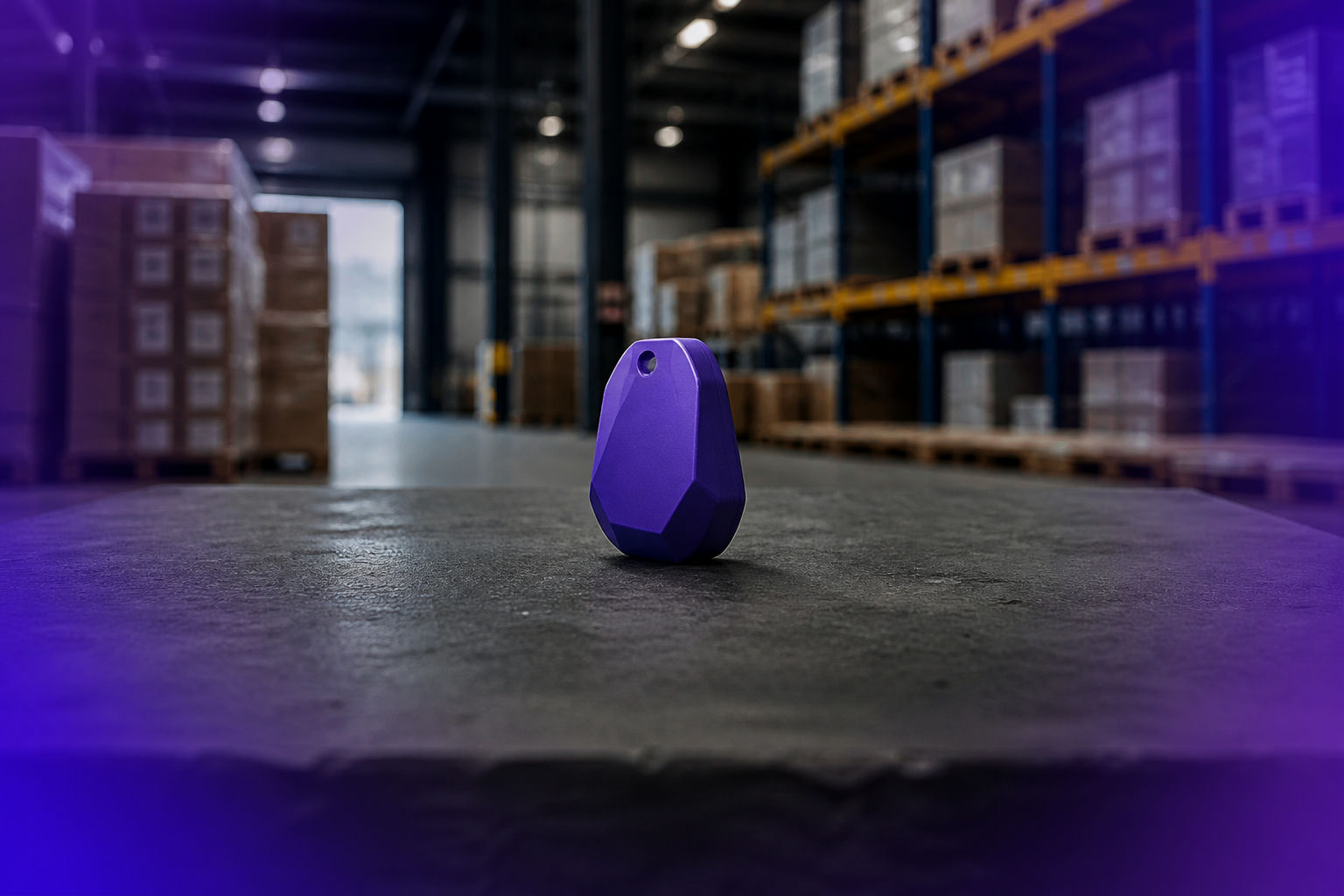
Bluetooth beacon selection as of 2026 has moved beyond the basic question of whether a tag can be heard. Teams also have to weigh maintenance, reader coverage, item granularity, and whether the device can support continuous condition sensing across normal workflows.
The maintenance hurdle: battery pucks vs. battery-free continuous tracking
Battery pucks are the familiar form of many BLE beacon deployments. They can be practical for assets with enough value to justify attachment, monitoring, and replacement work, but their maintenance model becomes harder when the estate grows across many sites and partners.
Battery-free IoT Pixels change that discussion by focusing on scan-free sensing without a per-tag battery-maintenance program. The hardware question shifts from who replaces every cell to where the operation can read physical-world data often enough to support the decision.
Item-level maintenance fit
Wiliot is a Physical AI company that gives organizations continuous, scan-free visibility into the location and condition of every item in their supply chain. Battery-free IoT Pixels capture that data, and the Wiliot Physical AI Platform refines it into actionable insights, predicting problems such as shrink or mis-ships, along with spoilage, and recommending the next move.
That matters most where the unit economics are tight. A reusable container, case, or product-level workflow may need item-level visibility without turning every tag into a maintenance liability. The right answer depends on asset value, required read points, condition requirements, and the tolerance for missed observations.
Comparative trade-offs: BLE beacons vs. passive RFID vs. cellular GPS
Passive RFID and BLE do different jobs well. RFID is often associated with intentional read points and high-speed identification. BLE beaconing is useful when repeated proximity events and dwell patterns are more important than a single portal read.
Cellular GPS fits a different scale. It can report location across wide areas when network service and power are available, but it is usually a poor fit for dense, item-level indoor inventory or low-cost reusable packaging.
A practical comparison looks like this:
- Use BLE beacons when indoor proximity, dwell, and receiver-based movement history are central to the workflow.
- Use passive RFID when fixed read points, handheld reads, or bulk identification events are the main requirement.
- Use cellular GPS when outdoor route-level visibility matters more than dense indoor item-level visibility.
- Use ambient IoT when the operation needs physical products that can be identified and monitored without a per-tag battery program.
For teams comparing RFID and Bluetooth in pallet or container workflows, a deeper operational comparison is covered in Beacon Localization vs. RFID: Closing the Pallet Case.
Deploying Bluetooth asset visibility: practical next steps for logistics teams
Bluetooth asset visibility should start with the quality decision that needs better evidence. Device choice comes after the team knows where identity, dwell, condition, or handoff data changes the outcome.
Evaluating facility infrastructure and gateway density
Gateway density should be planned around process choke points rather than drawn as a neat coverage map. A receiver at the right dock door can be more useful than broad radio coverage in an area where no decision gets made.
Start with a simple facility walk:
- Mark receiving, putaway, staging, cold storage, wash, returns, quarantine, and dispatch zones.
- Identify where manual scans are missed, rushed, or performed after the fact.
- Decide which zones need proof of presence and which need proof of absence.
- Test whether receivers can hear the asset form factor in normal operating conditions.
- Map each sighting to an action, such as release, hold, investigate, rebalance, or receive.
The best rollout plans avoid vague "visibility" goals. They ask whether a better signal would reduce a specific error: a mis-ship, a missed receipt, a cold-chain hold, a reusable-asset shortage, or a phantom inventory adjustment.
Next steps: transitioning from manual audits to autonomous verification
Autonomous verification means the system checks routine movement and condition evidence without waiting for a person to scan every item. People still decide edge cases, but routine proof comes from observations rather than scans.
A first deployment should stay narrow. Choose one reusable asset loop, one cold-chain lane, or one receiving workflow where the pain is visible and the exception path is clear. Compare beacon observations with the current record to find where manual data is late, missing, or wrong.
If the goal is inventory accuracy, pair beacon events with the metrics the business already trusts. The next step is to connect sightings to inventory availability, inventory traceability, and real-time inventory intelligence, so operators can make inventory decisions with real-world data rather than delayed scan records.
Deployment rule for evidence
A Bluetooth beacon is useful when its broadcast becomes evidence. Put receivers where decisions happen, define the exceptions before rollout, and choose hardware that matches the lifecycle of the asset being monitored.
Frequently asked questions
What is a Bluetooth beacon and how is it used in supply chain quality control?
A Bluetooth beacon is a BLE transmitter that repeatedly broadcasts an identifier, and in some deployments condition data, to nearby receivers. In supply chain quality control, those sightings help teams verify where assets or products and the containers that hold them were heard, how long they stayed there, and whether a process exception needs review. Source: IoT Pixels
How does bluetooth asset tracking reduce manual inventory errors?
Bluetooth asset tracking reduces manual inventory errors by creating scan-free observations between formal inventory steps. Instead of relying only on a worker to scan a barcode at the right moment, receivers can hear tagged items as they move through receiving, staging, storage, and dispatch, which helps expose missed receipts and idle stock, along with process gaps. Source: Inventory Intelligence
How do tracking stickers improve inventory visibility compared to barcodes?
Tracking stickers improve inventory visibility when they can be read without a direct manual scan. A barcode usually needs line-of-sight and a person or fixed scanner to capture it, while BLE or ambient IoT stickers can support repeated observations that show patterns for location and dwell time with condition context across the workflow. Source: IoT Pixels
What tools can provide real-time SKU tracking in a warehouse?
Real-time SKU tracking in a warehouse usually needs identifiers on goods plus receivers or gateways in the facility, with software that turns sightings into inventory events. For SKU-level operations, the useful tool is the one that connects item identity to inventory availability and operational decisions, including exceptions, rather than only producing raw reads. Source: Inventory Intelligence
What are the most reliable bluetooth asset tracking tags for warehouse operations?
The most reliable bluetooth asset tracking tags are the ones that fit the asset lifecycle and read environment, along with the maintenance model. For warehouse operations, reliability depends on whether the tag can be heard in the right zones and survive normal handling while supporting the required identity or condition data without creating avoidable battery-service work. Source: Reusable Asset Tracking
Sources
Every reference cited on this page, in the order Wiliot evidence, related articles, then outside research.
- 1.IoT Pixels (wiliot.com)
- 2.Inventory Intelligence (wiliot.com)
- 3.Bluetooth beacons as BLE hardware transmitters (en.wikipedia.org)
- 4.systems (sciencedirect.com)
- 5.RSSI can be used to estimate position relative to several beacons (link.springer.com)