.svg)

Short answer
Energy harvesting is the process of capturing ambient energy, like radio waves, light, or temperature differences, and converting it into usable electrical power for low-power electronic devices. In IoT, this makes battery-free sensing possible by removing or reducing battery replacement work, especially in dense, distributed deployments where physical access is expensive, thus changing the maintenance model. Source: Wiliot IoT Pixels
Energy harvesting is the process of capturing ambient energy, such as radio waves, light, or temperature differences, and converting it into usable electrical power for low-power electronic devices. In IoT, that makes battery-free sensing possible, which matters because supply chain visibility only scales when sensors can keep reporting without a constant cycle of battery checks and swaps, plus the shipping and tracking work that ends in disposal.
As of 2026, more competitive energy storage technologies, lower-powered electronics, and increased power from energy harvesting technologies have made the model more viable as of 2026, so the operational question has shifted from whether ambient power works in principle to where it can remove real maintenance work.
How does energy harvesting reduce IoT maintenance costs?
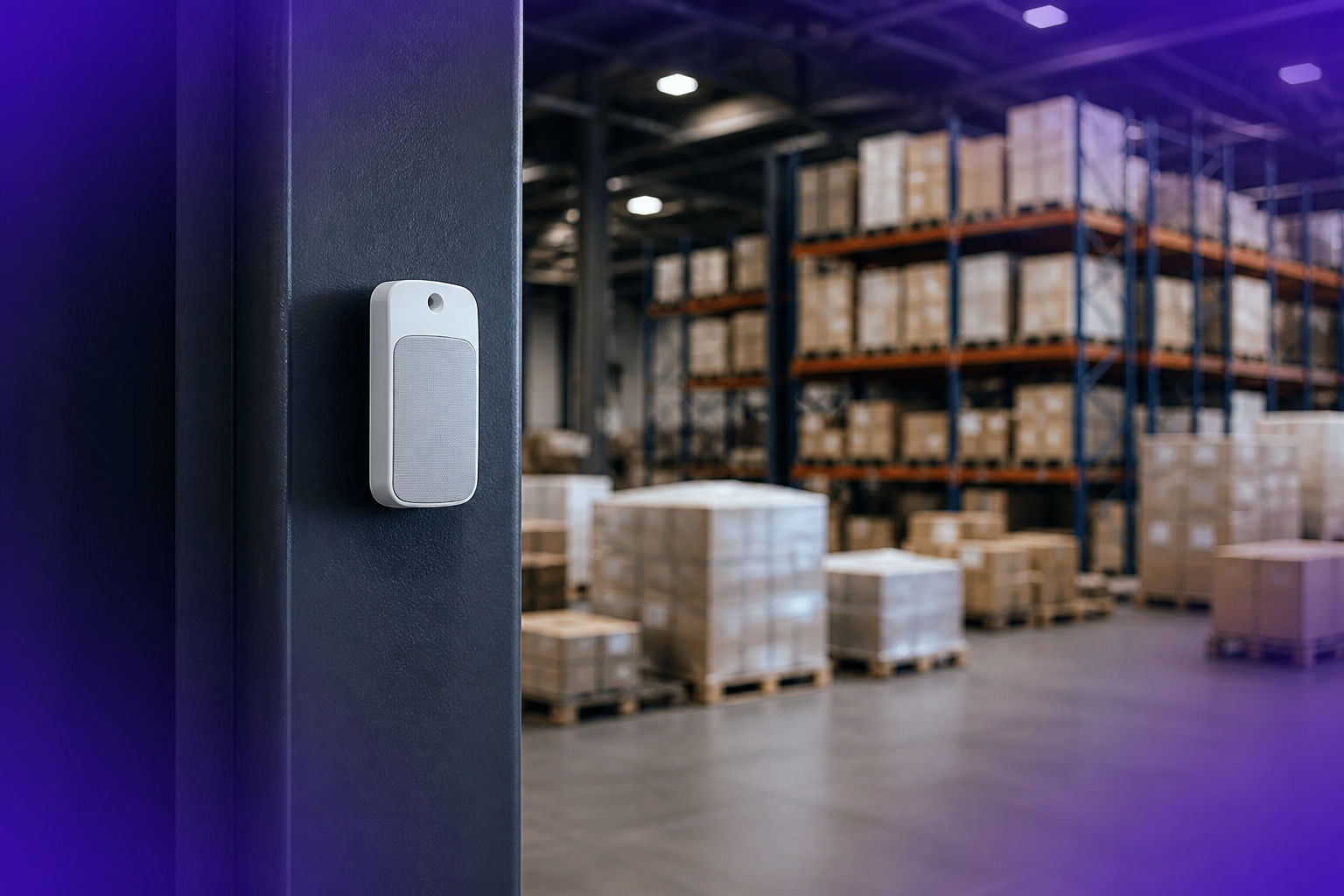
The simplest answer is that energy harvesting changes the maintenance model from sending someone to service a sensor to letting the environment help keep that sensor alive. That shift matters most when sensors are attached to pallets and totes, as well as crates, trays, containers, or individual products moving through warehouses, trailers, stores, and cold-chain handoffs, where physical access is often the expensive part.
Battery service is an operating cost, not a device feature
A battery-powered IoT sensor may look cheap until the fleet gets large enough that battery life becomes a labor plan. Someone has to know which sensors are dying, reach them physically, replace or recharge the batteries, confirm that each device came back online, and deal with units that fail between service windows.
Energy harvesting reduces IoT sensor maintenance cost by removing or reducing battery replacement work, especially in dense, distributed deployments where physical access is the expensive part.
For a cold-chain quality leader, that is not an abstract device-management problem. It is a network problem, because reusable assets move among 3PLs, carriers, distribution centers, stores, suppliers, and return loops. A battery-maintenance program can quickly become more painful than the sensing program it was meant to support.
Battery-free sensors make item-level visibility more realistic
Battery-free IoT sensors make more sense when the goal is continuous condition sensing across many low-cost physical goods, rather than occasional reads from a small number of expensive devices. The sensor can be smaller, the servicing burden drops, and the operational team can focus on exceptions that matter, including dwell time, temperature exposure, missed handoffs, or inventory imbalance.
That is the maintenance answer in plain English: energy harvesting does more than power the sensor. It removes a recurring field task that becomes expensive precisely when IoT starts working at scale.
Foundations: the three pillars of modern energy harvesting
Once the maintenance problem is clear, the next question is why energy harvesting has become more practical as of 2026. The shift is not coming from one magic component. It comes from better storage and lower-power electronics, paired with harvesting methods that can pull useful energy from ordinary operating environments.
More efficient energy storage
Energy storage still matters in many harvesting designs because ambient energy is uneven. Light changes, radio signals vary, and temperature gradients can disappear, so better storage gives a device a buffer that keeps it operating through gaps instead of shutting down the moment the harvested source weakens.
That buffer does not have to be a traditional replaceable battery. In many low-power designs, the storage element smooths operation rather than carrying the device's full lifetime energy burden. The practical difference matters because maintenance cost is tied to replacement work, not to the mere existence of stored energy.
Lower-power electronics
Lower-power electronics are the second pillar because the device's energy budget determines whether ambient power is useful or symbolic. A sensor that wakes briefly, measures a simple condition, sends a small signal, and returns to a low-power state is a much better fit than a device trying to behave like a phone.
That is why the best use cases tend to start with focused operational questions:
- Is the item present?
- Where did it last appear?
- Has it been sitting too long?
- Was it exposed to the wrong condition?
- Did the shipment, pallet, crate, or tote move through the expected handoff?
Those are high-value questions, and they do not require a power-hungry device to answer.
More powerful harvesting technologies
Harvesting technologies have also improved, which means more ambient sources can be useful in more places. As of 2026, practical IoT discussions usually focus on radio waves and light, with motion, vibration, and temperature differences also considered, rather than exotic sources that only work in a lab.
The business implication is blunt: if a sensor can live on energy already present in its environment, the deployment can spread to many more physical goods without creating a matching wave of battery work.
Key terms in energy harvesting
With the foundations in place, the vocabulary becomes easier. These terms show up repeatedly in IoT planning, vendor evaluations, and technical discussions, but they are often used loosely.
Ambient energy
Ambient energy is energy already present in the environment around a device. For IoT sensors, that can include RF signals, indoor or outdoor light, temperature differences, vibration, movement, or small mechanical forces.
In supply chain settings, the useful question is not which source sounds best. The useful question is which source exists reliably where the sensor actually spends time. A freezer, a dock door, a truck trailer, a retail back room, and a sunlit yard can all create very different harvesting conditions.
Transducer
A transducer is the part of a system that converts one form of energy into another. In energy harvesting, it is the bridge between the ambient source and usable electrical power.
Examples are easier than the word itself:
- A photovoltaic material converts light into electricity.
- An RF harvesting element captures radio-frequency energy.
- A thermal device uses a temperature difference to create usable energy.
- A mechanical harvester can convert motion, pressure, or vibration.
The transducer does not solve the whole system by itself, but without it, there is no conversion.
Power management integrated circuit (PMIC)
A power management integrated circuit, often shortened to PMIC, controls how harvested energy is collected and conditioned, then stored and delivered to the electronics. It matters because ambient energy is usually small and inconsistent.
As of 2026, energy-harvesting systems often pair harvesting with power management and low-profile storage, a pattern reflected in IEEE coverage of advanced power management techniques used to extend battery life. For operators, the technical detail is less important than the outcome: the device needs enough usable power at the right moment to sense, process, and communicate.
Internet of Things sensor
An Internet of Things sensor is a connected device that measures something about the physical world and sends that data into a digital system. In supply chains, that might mean presence and location data, plus temperature, humidity, motion, dwell, or other condition data tied to a product or asset.
The more granular the sensing goal, the more important the power model becomes. A small number of powered gateways can be serviced. Very large item-level fleets cannot be treated the same way.
Ambient energy sources for IoT sensors as of 2026
The specific type of ambient energy matters because every supply chain environment is different. The right source depends on where the sensor lives, how often it needs to report, and what kind of condition or inventory insight the operation needs.
RF and radio waves
RF energy is attractive for supply chain IoT because radio signals already exist in many operational environments. A low-power device can harvest ambient RF energy and communicate small amounts of physical-world data without carrying the same maintenance burden as a conventional battery-powered tag.
This is especially relevant for scan-free visibility between manual scans and fixed read points. A barcode tells you something when a person scans it. A fixed portal tells you something at the read point. Ambient IoT aims at the gaps between those moments, where pallets, trays, totes, crates, and products may sit, move, or wait without generating a clean digital record.
Solar and light energy
Solar energy is one of the most intuitive forms of harvesting because the source is familiar. In IoT, the useful version is not limited to rooftop panels. It can include small photovoltaic elements that draw power from outdoor light or suitable indoor light.
Food cold chain research has already treated this as a practical sensing model: a proposed solar-powered, battery-free sensing system for food cold chain management reduced average energy consumption by 87.A proposed solar-powered, battery-free sensing system for food cold chain management could reduce the average energy consumption by 87.04% and the cost by 15.3% compared with battery-powered systems in the researchers' evaluation of a solar-powered battery-free sensing system for food cold chains.3% compared with battery-powered systems in the researchers' evaluation of a solar-powered battery-free sensing system for food cold chains. Those numbers should not be copied blindly into every deployment, but they show why operators pay attention to the maintenance arithmetic.
Matching light to the route
Light is also uneven. A crate in a dark trailer, a pallet in a back room, and a package in a sunny staging area have different energy opportunities, so light harvesting usually works best when device behavior, reporting frequency, and storage design match the real operating route.
Thermal energy and temperature differentials
Thermal energy becomes useful when there is a meaningful temperature difference or when a material can convert thermal changes into another form of energy. This is particularly interesting for cold chain because temperature is already central to the operation, even though every environment does not provide the right gradient for harvesting.
NIST has described thermal harvesting approaches that convert heat energy into mechanical energy through pyroelectric scavenging devices, and also described a phase-changing material concept that uses temperature differences in ocean thermoclines to power unmanned underwater vehicles through thermal energy harvesting from energy differentials. The supply chain lesson is narrower than the research itself: temperature differences can be an energy source, but the route and environment decide whether they are dependable.
Route fit matters
For cold-chain operators, that distinction matters. A temperature sensor that also draws energy from the surrounding thermal conditions must still give trustworthy condition data, so the harvesting method cannot interfere with the operational reason the sensor exists.
Other emerging sources
Water energy harvesting is part of the wider research conversation as of 2026. Nature published work on small-scale water energy harvesting for sustainably-powered distributed electronics, showing that researchers are still widening the set of possible sources for low-power devices through small-scale water energy harvesting research.
Flexible electronics are another area to watch carefully rather than hype. A 2026 Nano Energy review covered liquid metal-enabled energy harvesting for self-powered flexible electronics, placing bendable and material-driven harvesters inside the broader discussion of self-powered flexible electronics.
Operating tests
For supply chain IoT, emerging sources become useful only when they survive the boring tests: cost and durability, data reliability and attachment method, read range, cleaning, handling, return loops, and integration with inventory systems. A clever harvester that cannot live on a crate, pallet, tote, or product through real handling is still a research story, not an operating model.
The business case: where battery-free changes the arithmetic

The energy source sets the technical boundary, but the business case comes from what happens after deployment. The biggest savings usually do not come from the harvested energy itself. They come from the operating work that disappears when sensors no longer need routine battery service.
Cold chains make the cost problem sharper
Cold chains are specialized supply chains that preserve temperature-sensitive products from procurement to fulfillment, and they are vital for goods such as perishable food and medicine. Because refrigeration adds cost, energy use, and emissions, cold chains incur higher operational costs, energy consumption, and emissions than traditional supply chains.
That is why battery-free sensing is so relevant for cold-chain quality teams. The operation is already balancing product quality and timeliness, along with equipment availability and environmental pressure. Adding a large battery-servicing workflow on top of that can make the visibility program harder to sustain.
Blind spots create pressure
Cold chains also punish blind spots. A pallet that waits too long in the wrong place, a reusable container that disappears from the loop, or a shipment that arrives without clean condition history can create commercial and compliance pressure. Better sensing helps, but only if the sensing program itself does not become another operational burden.
Physical AI depends on dense physical-world data
Wiliot is a Physical AI company that gives organizations continuous, scan-free visibility into the location and condition of every item in their supply chain. Battery-free IoT Pixels capture that data, and the Wiliot Physical AI Platform refines it into actionable insights, predicting problems like shrink, mis-ships, and spoilage, and recommending the next move.
That operating model depends on dense physical-world data, not occasional snapshots. The Wiliot Physical AI Platform uses IoT Pixels that harvest ambient RF energy and are read over existing Bluetooth infrastructure, which supports item-level visibility without forcing operators into a per-tag battery-maintenance program. For reusable assets, that means the same pool of pallets and trays, plus totes, crates, or roll cages, can generate journey, area, and dwell data as they circulate.
Inventory payoff
For inventory teams, the payoff is the ability to make inventory decisions with real-world data instead of waiting for manual counts to reveal a problem. If the operational pain is variance, phantom stock, or unclear asset dwell, this related guide on inventory accuracy is a useful next step.
The arithmetic changes at scale
Total cost of ownership changes when the sensor fleet grows. A small pilot can tolerate manual servicing. A large item-level deployment cannot assume that every tag will be easy to find, touch, open, recharge, or replace.
The costs that matter usually sit in four buckets:
- Labor to inspect, replace, recharge, or troubleshoot sensors.
- Downtime or missing data when a device dies before service.
- Reverse logistics for devices that must be collected or repaired.
- Waste and compliance work tied to battery handling and disposal.
Battery-free sensing does not remove every cost. It still requires planning, infrastructure, data integration, and process change. But it removes one of the hardest costs to defend at scale: paying people to maintain the power source on devices whose job is to quietly report on physical goods.
What to do with this knowledge
Treat energy harvesting as a design constraint for IoT programs, not as a novelty feature. Start with the operating question, then decide whether the power model can support it without creating a maintenance plan that eats the value.
Connect sensing to decisions
Research in 2026 on mechanism-driven AI for food cold-chain systems focused on near-product, multimodal sensing paired with kinetics-informed and physics-aware models to infer remaining shelf life, safety margins, and quality risk in real time through AI methods for food cold-chain systems. That framing is useful because the sensor is only the beginning. The value comes when condition data, dwell data, and inventory signals improve decisions before waste, shrink, or stockouts show up in the numbers.
Wiliot's Inventory Intelligence solution fits that direction: physical products that can be identified and monitored generate the physical-world data needed for real-time inventory intelligence. If an IoT plan depends on dense sensing while also depending on thousands or millions of battery swaps, the contradiction is already built in. Energy harvesting is how those plans become operationally sane.
Frequently asked questions
How do I reduce the maintenance cost of IoT sensors with energy harvesting?
Energy harvesting reduces maintenance cost by letting low-power sensors draw energy from ambient sources such as radio waves, light, or temperature differences, rather than depending on routine battery swaps. In supply chains, the savings come from avoiding the field work of finding, opening, replacing, recharging, and validating sensors across distributed assets and products. Source: IoT Pixels
What are the most common sources of energy for harvesting in a supply chain?
The most relevant sources are RF energy, light, and temperature differences, with motion or vibration sometimes considered depending on the environment. RF is useful where existing wireless infrastructure can support low-power sensing, light can work where exposure is reliable, and thermal harvesting depends on a usable temperature gradient. Source: Physical AI platform
Can I replace batteries in every IoT device with energy harvesting?
No. Energy harvesting works best for low-power devices with modest sensing and communication needs. Some devices still need batteries or other stored energy because they transmit more often, process more data, or operate in environments where ambient energy is inconsistent. The practical question is whether the job can be done with a battery-free or battery-assisted design. Source: IoT Pixels
How does AI work with energy harvesting sensors to improve logistics?
AI needs reliable physical-world data before it can make useful recommendations. Battery-free sensors can feed data about location and dwell time, as well as temperature and movement, into a platform that identifies exceptions such as idle assets, shipment issues, inventory variance, or cold-chain risk. The result is better supply-chain visibility without adding a large battery-maintenance program. Source: Physical AI platform
Sources
Every reference cited on this page, in the order Wiliot evidence, related articles, then outside research.
- 1.Wiliot Physical AI Platform (wiliot.com)
- 2.IoT Pixels (wiliot.com)
- 3.more competitive energy storage technologies, lower-powered electronics, and increased power from energy harvesting technologies have made the model more viable as of 2026 (ieeexplore.ieee.org)
- 4.How does energy harvesting reduce IoT maintenance costs? (kkkcdzmhnnqevxhexzpo.supabase.co)
- 5.IEEE coverage of advanced power management techniques used to extend battery life (ieeexplore.ieee.org)
- 6.thermal energy harvesting from energy differentials (tsapps.nist.gov)
- 7.small-scale water energy harvesting research (nature.com)
- 8.Foundations: the three pillars of modern energy harvesting (kkkcdzmhnnqevxhexzpo.supabase.co)